
02 December - 18 March, 2023
Mbaye Diop

Balle de Match
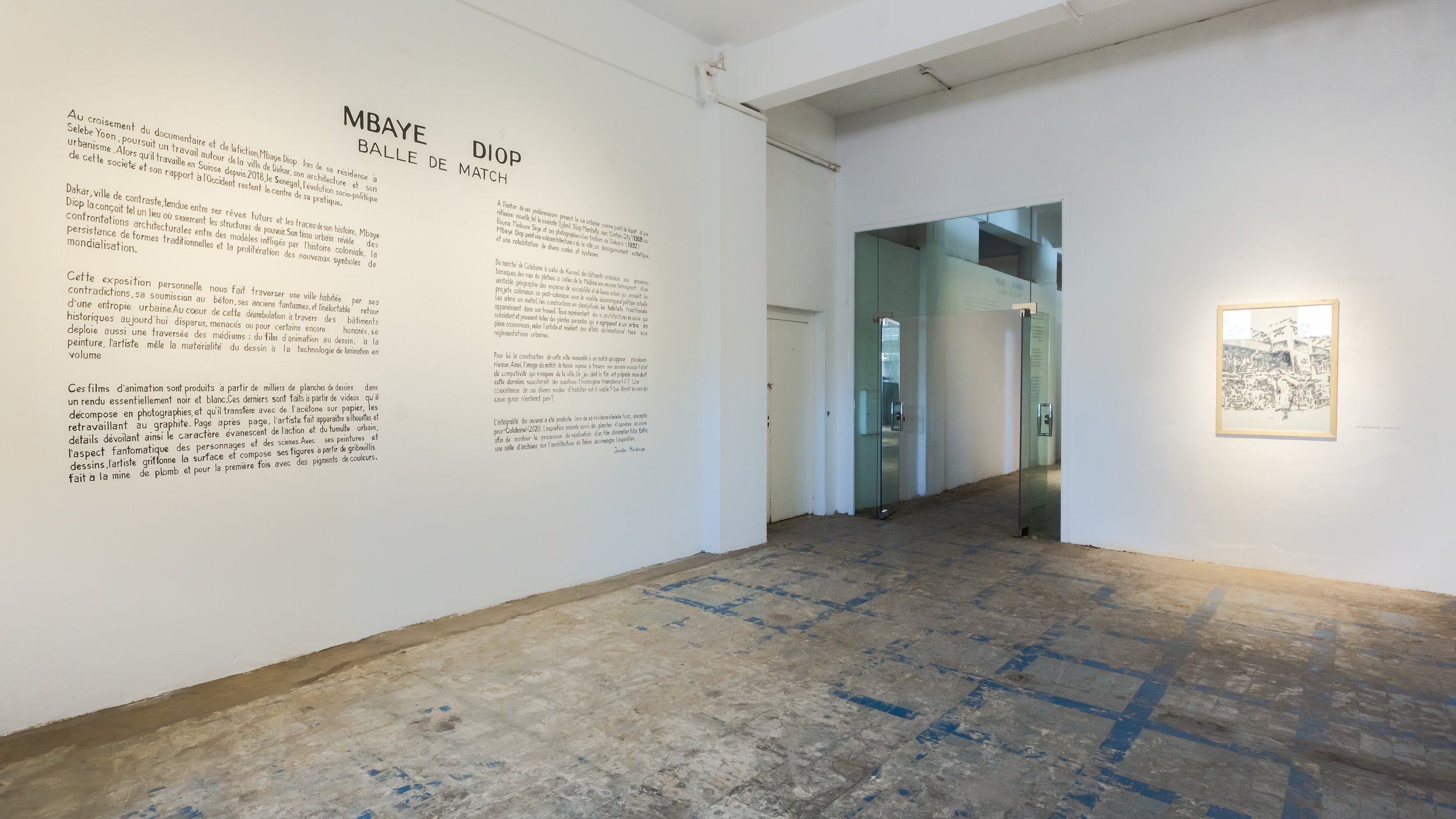
At the crossroad of documentary and fiction, Mbaye Diop focused his research on Dakar’s architecture and urbanism during his two-months residency at Selebe Yoon. While he is working in Switzerland since 2018, the socio-economic evolution of his native country, Senegal and its relationship to the West remain at the center of his practice.
Dakar - a city of contrast, torn between its future dreams and the traces of history, Mbaye Diop conceives it as a site where power structures are at play. Its urban fabric reveal architectural confrontations between models inflicted by colonial history, the persistence of traditional forms and the proliferation of new symbols of globalization.
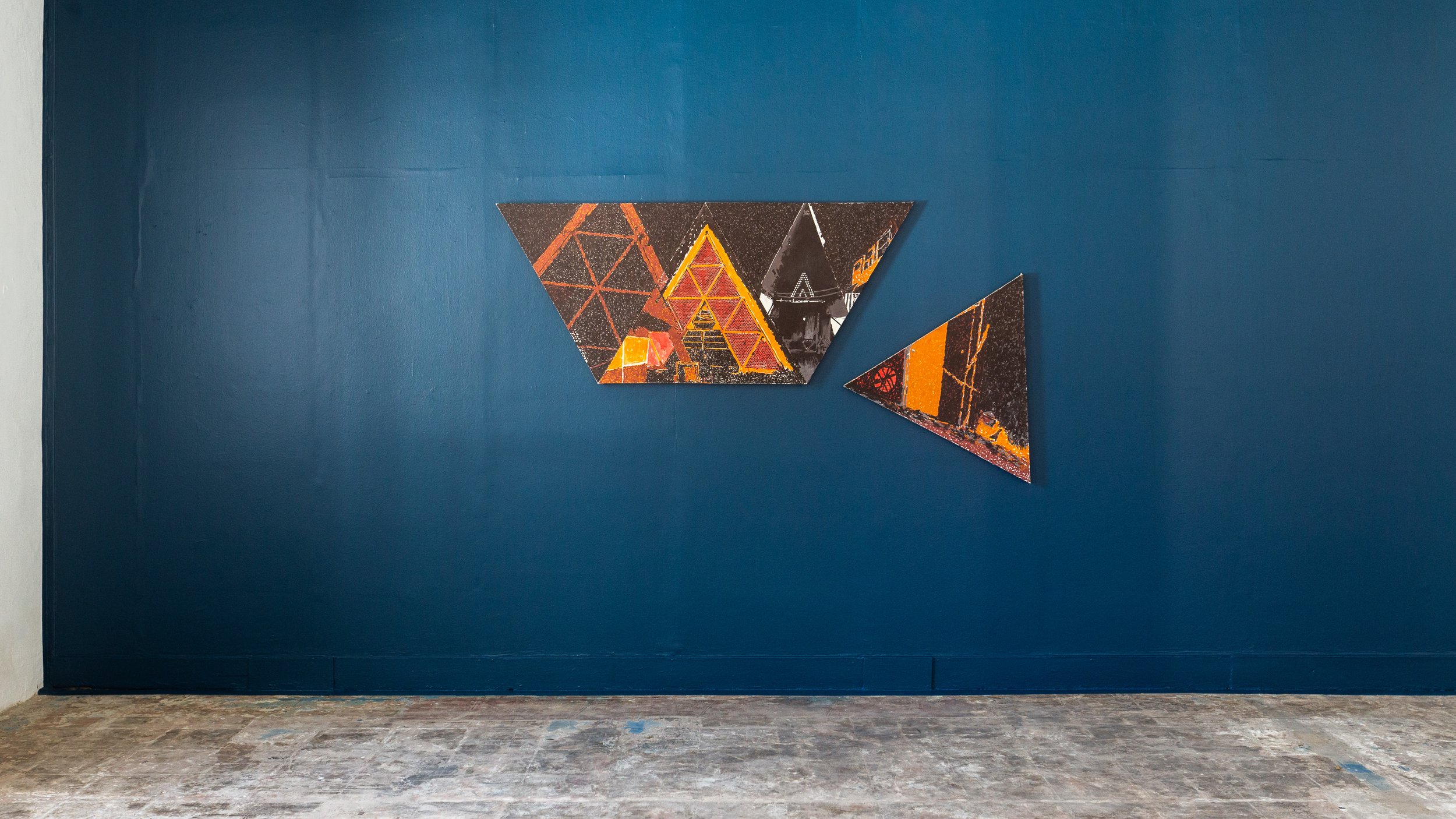
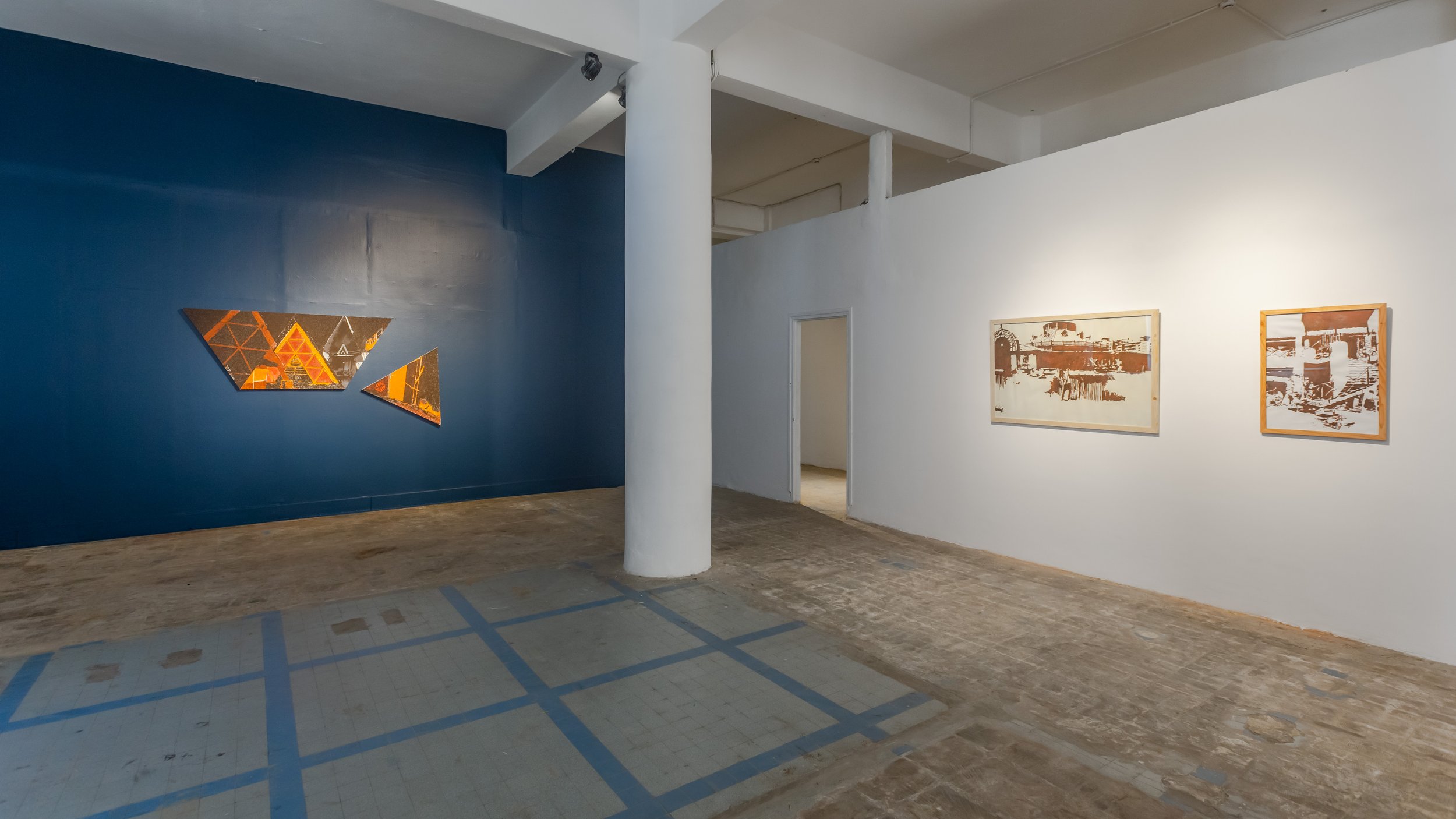
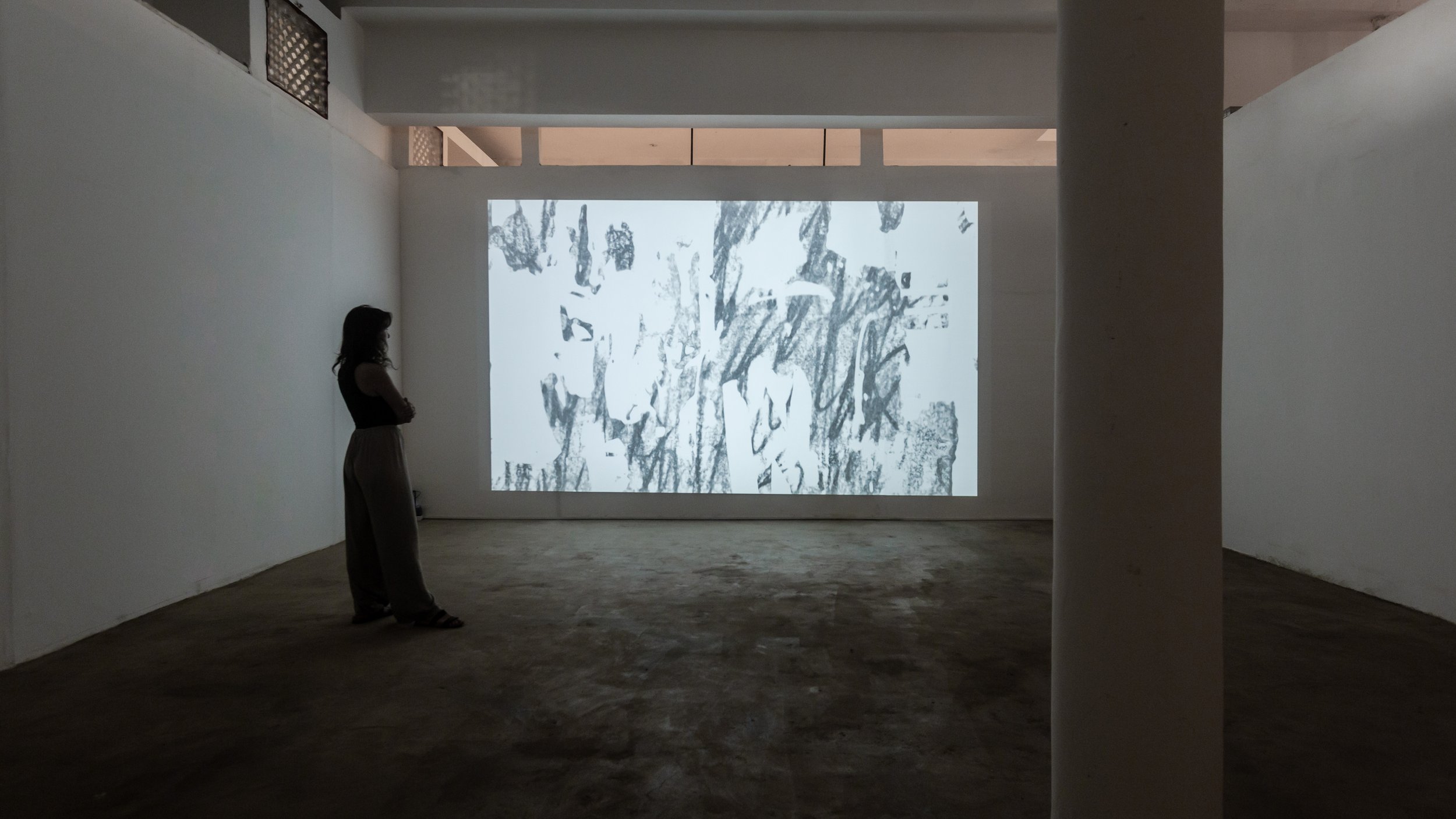
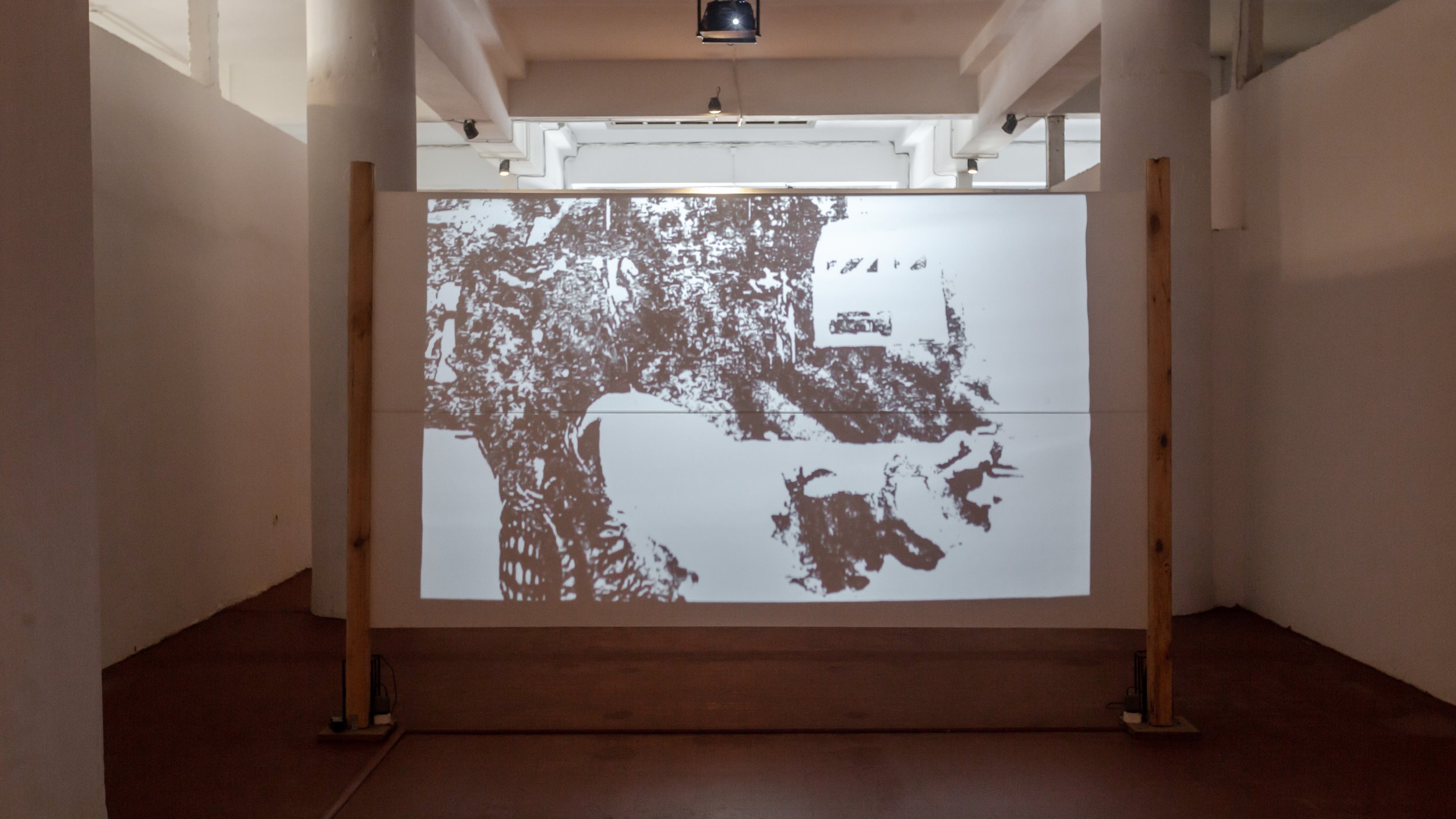
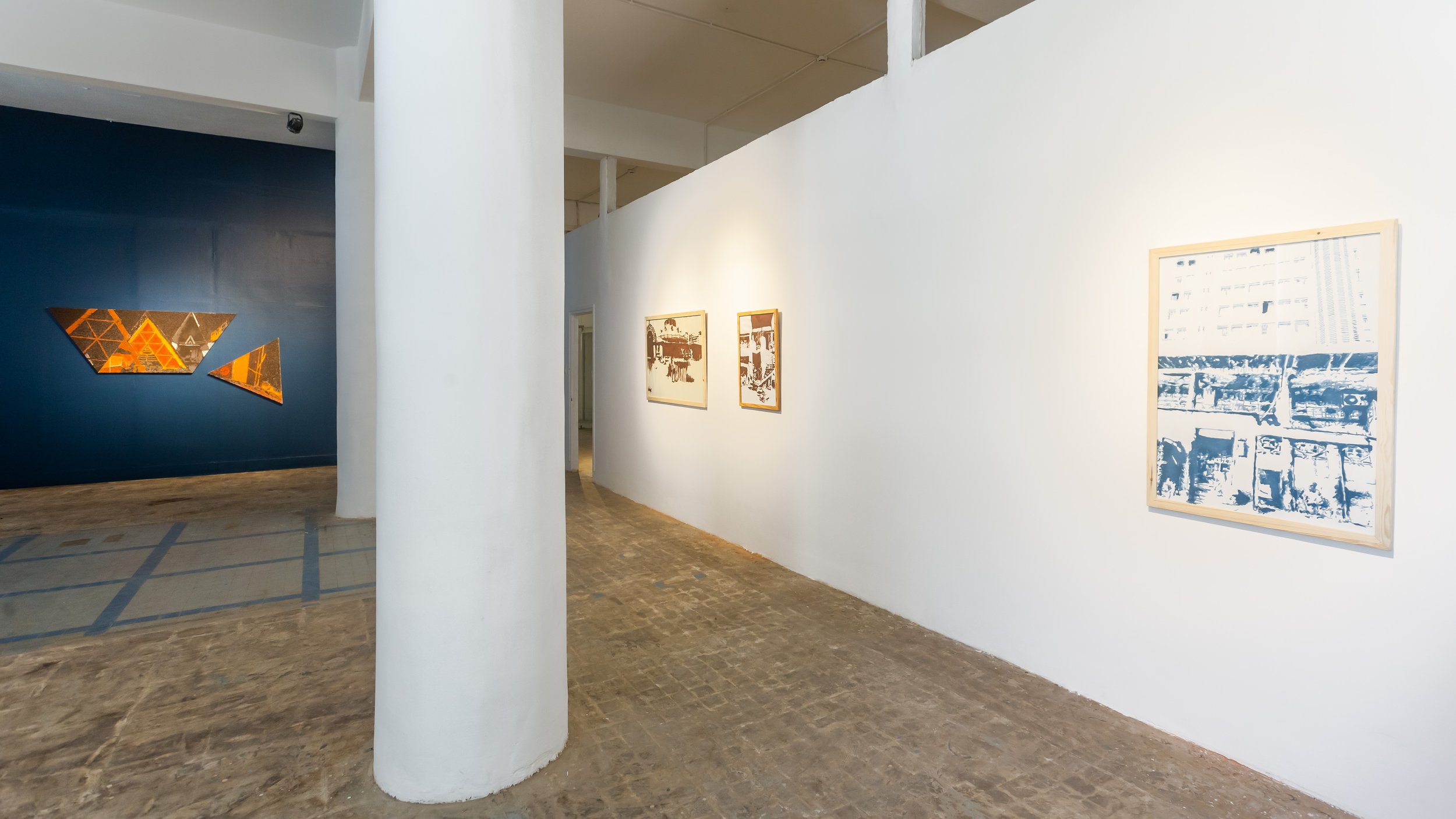
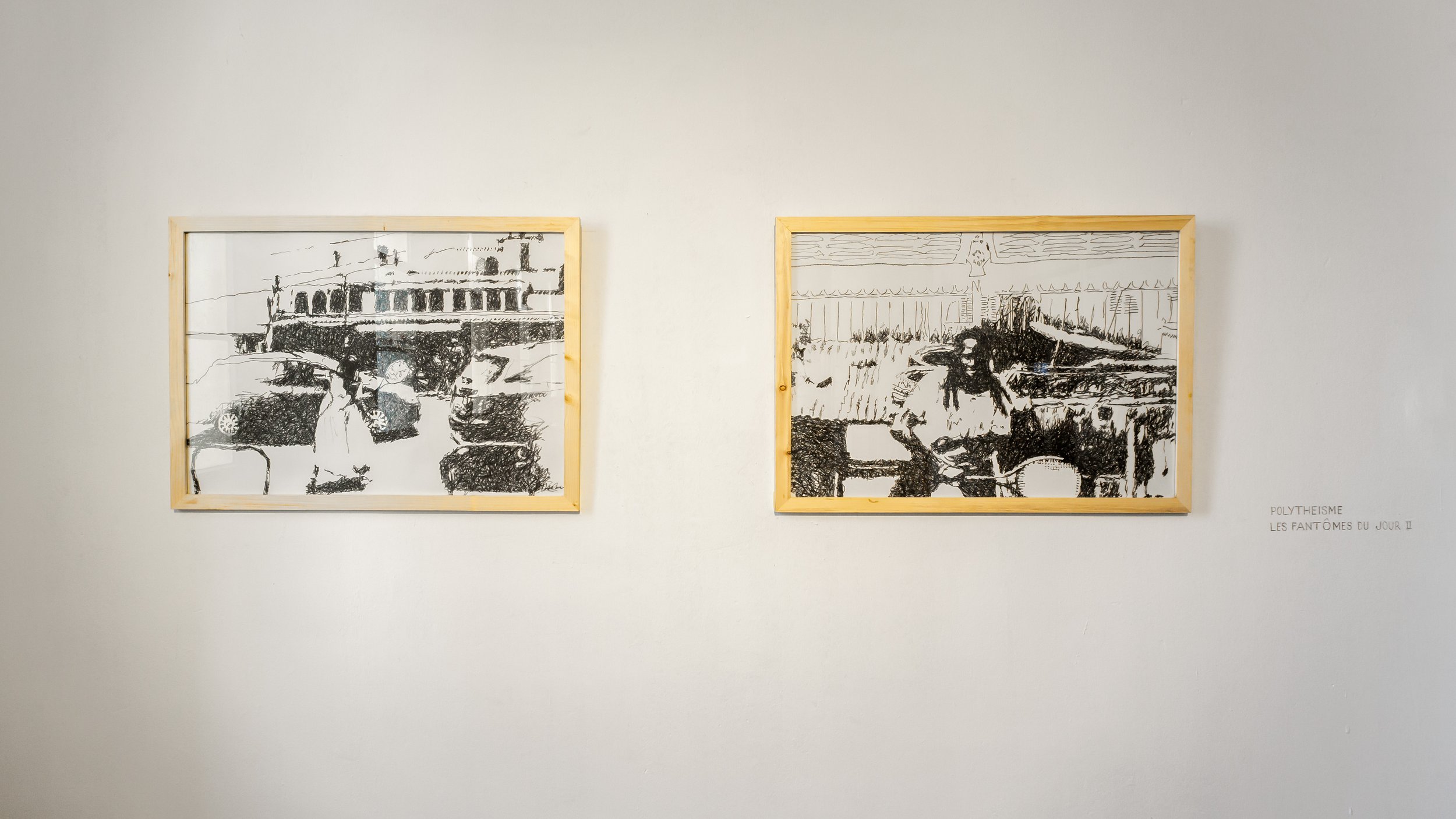
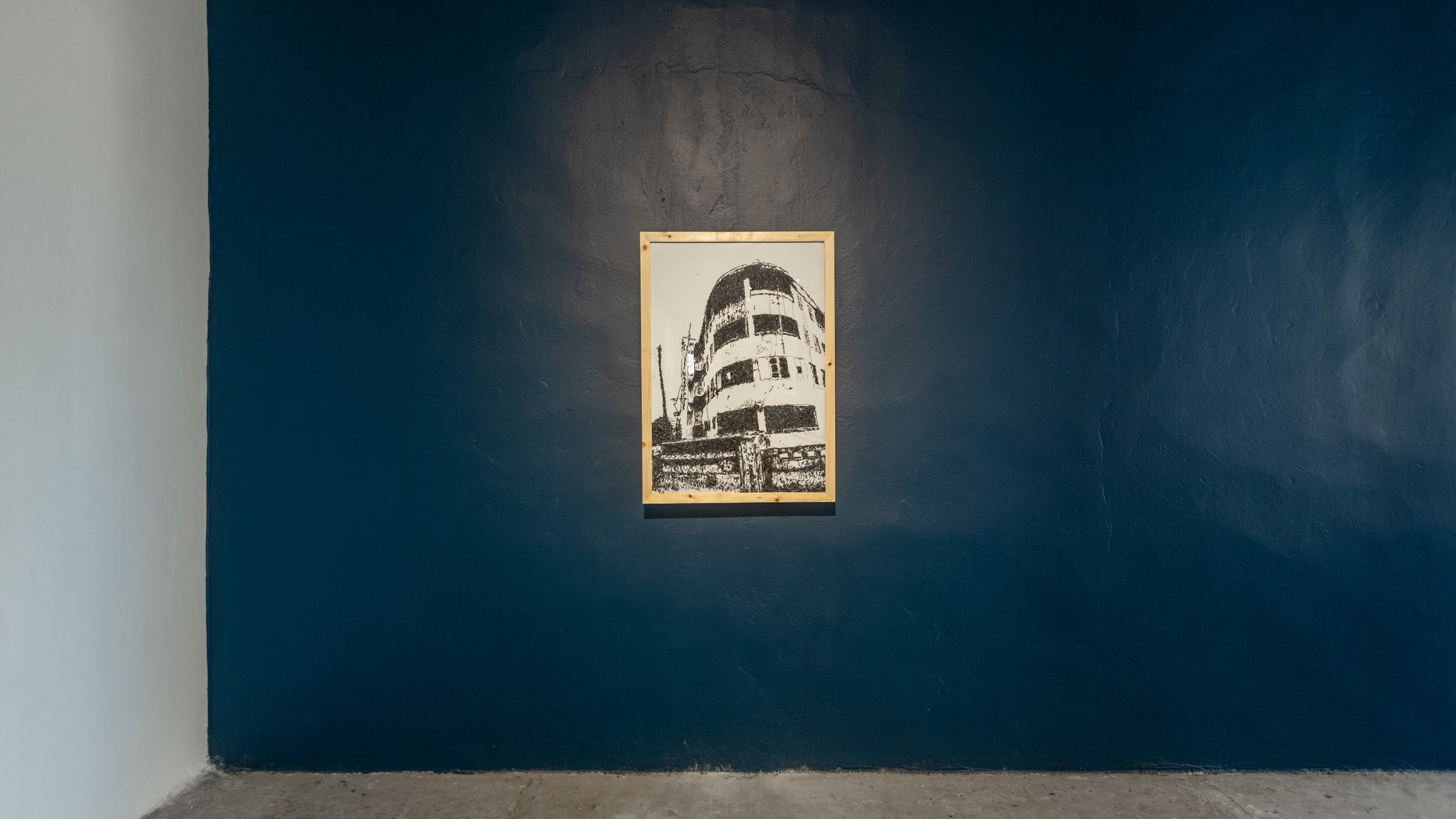
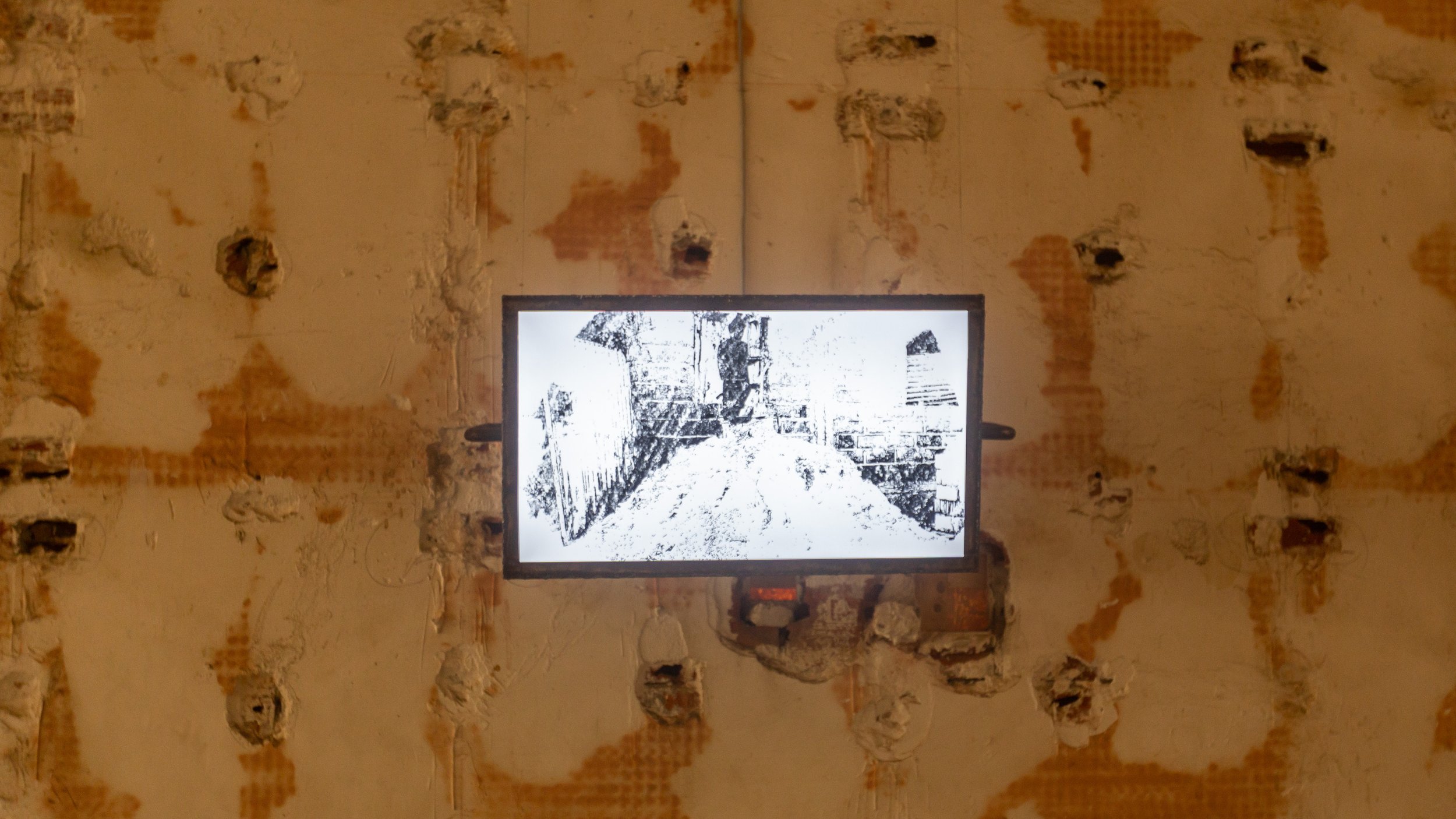
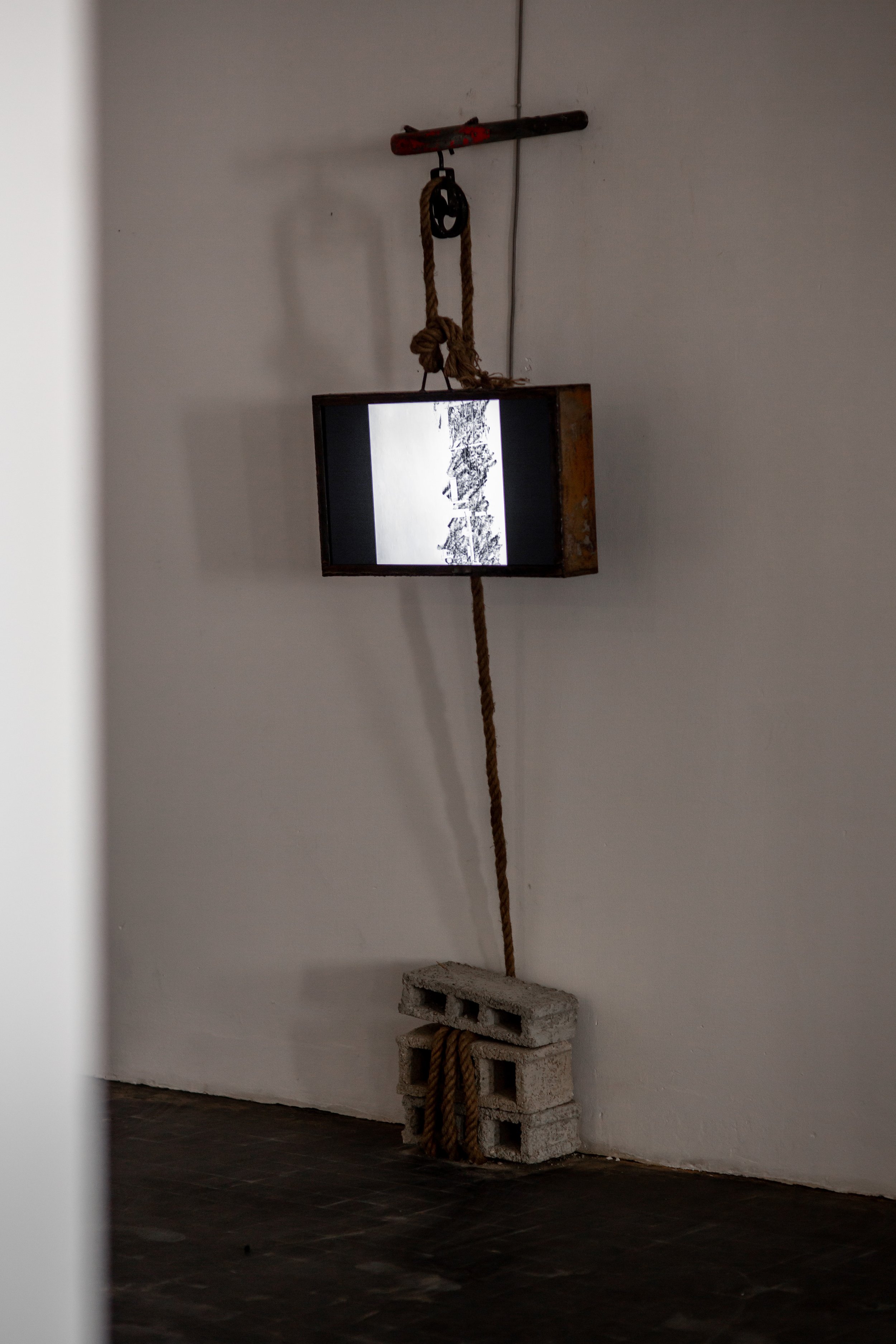
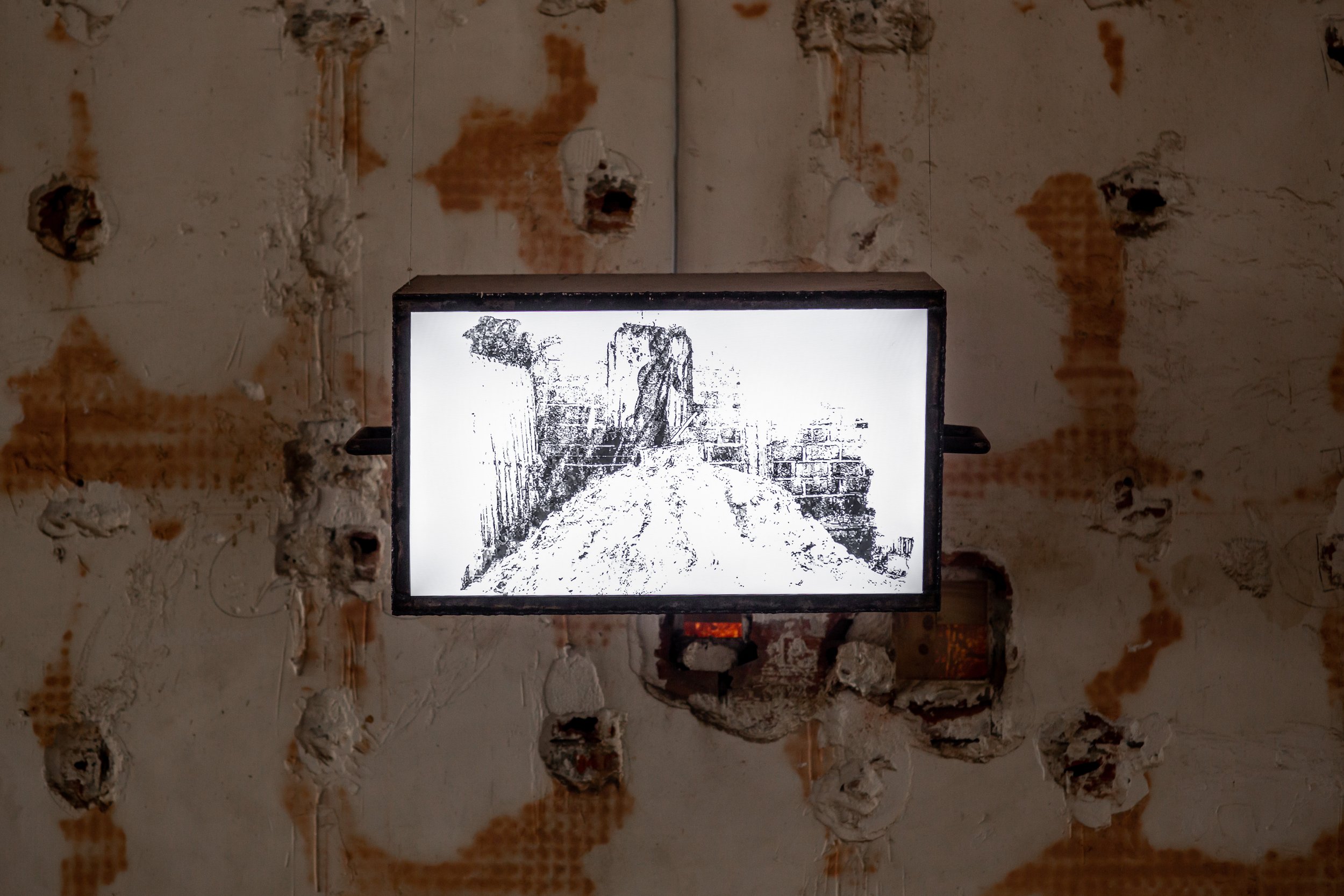
Mbaye Diop makes us roam through a city inhabited by its contradictions, its submission to concrete, its past fantasies, and the ineluctable return of urban entropy. As visitors discover historical buildings through his works that are either vanished, threatened or for the time being, honoured, a series of different mediums unfold: from animated films, drawings to paintings, the artist interweaves the physicality of drawing with stop-motion technology.
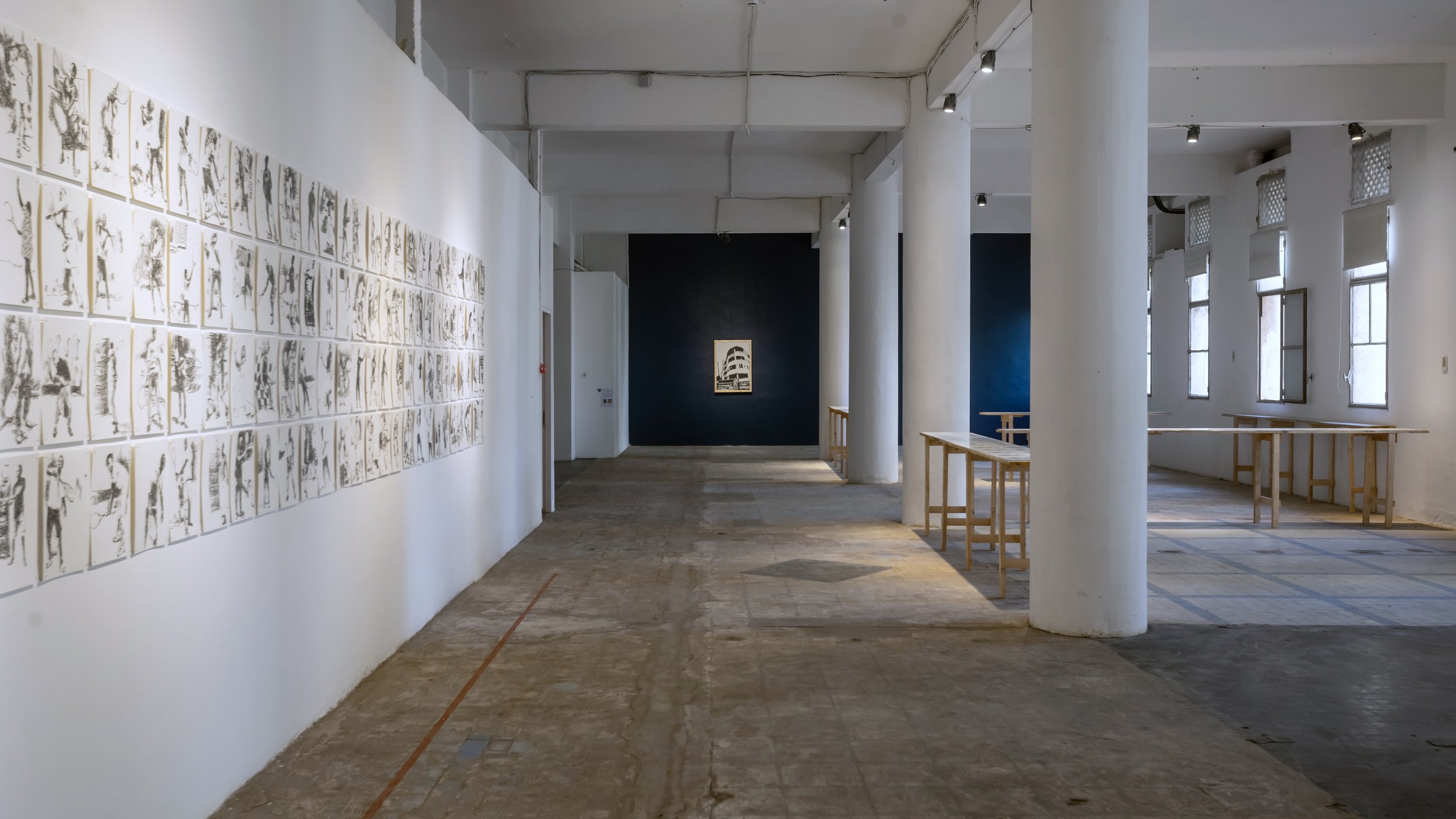
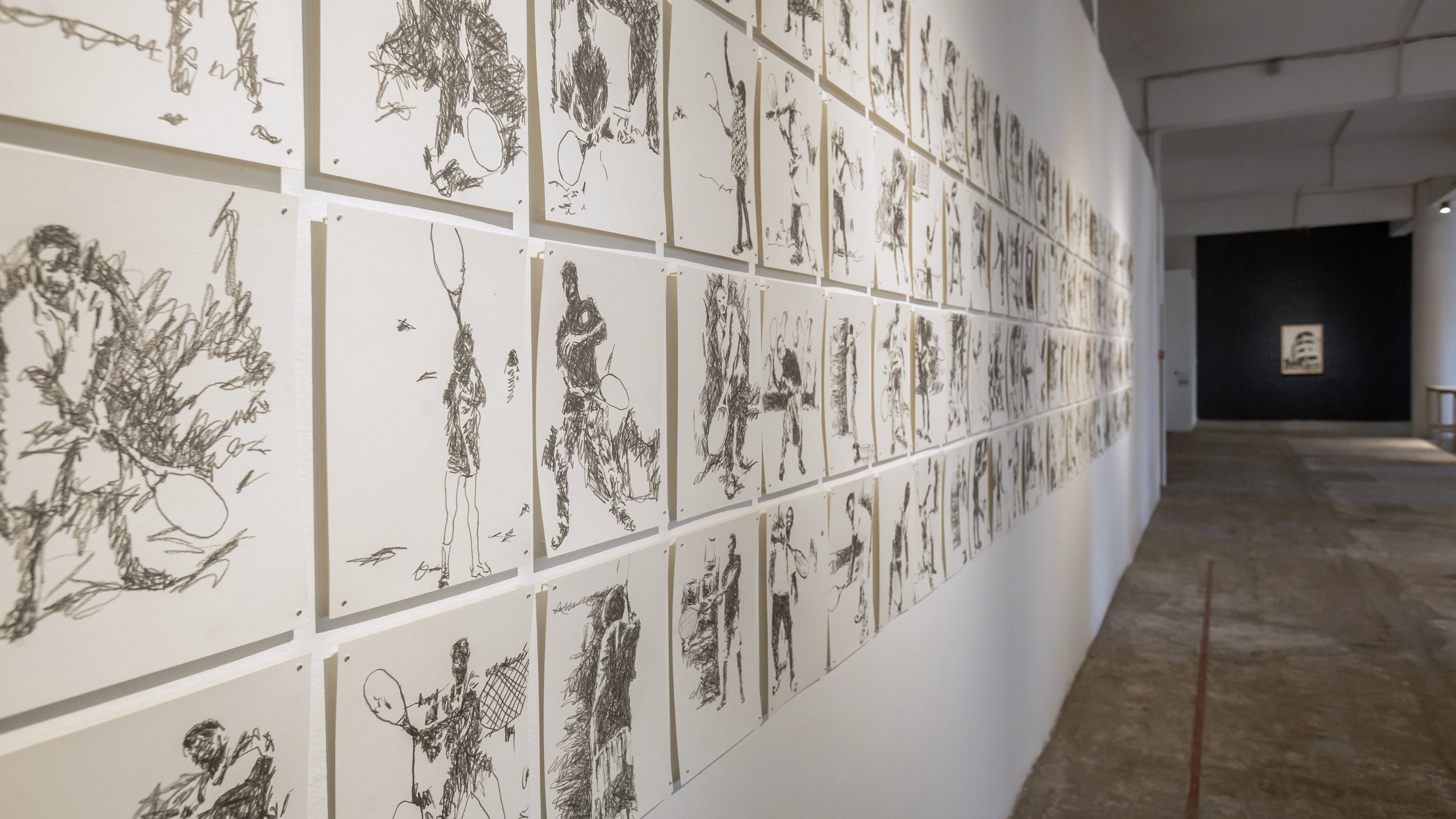
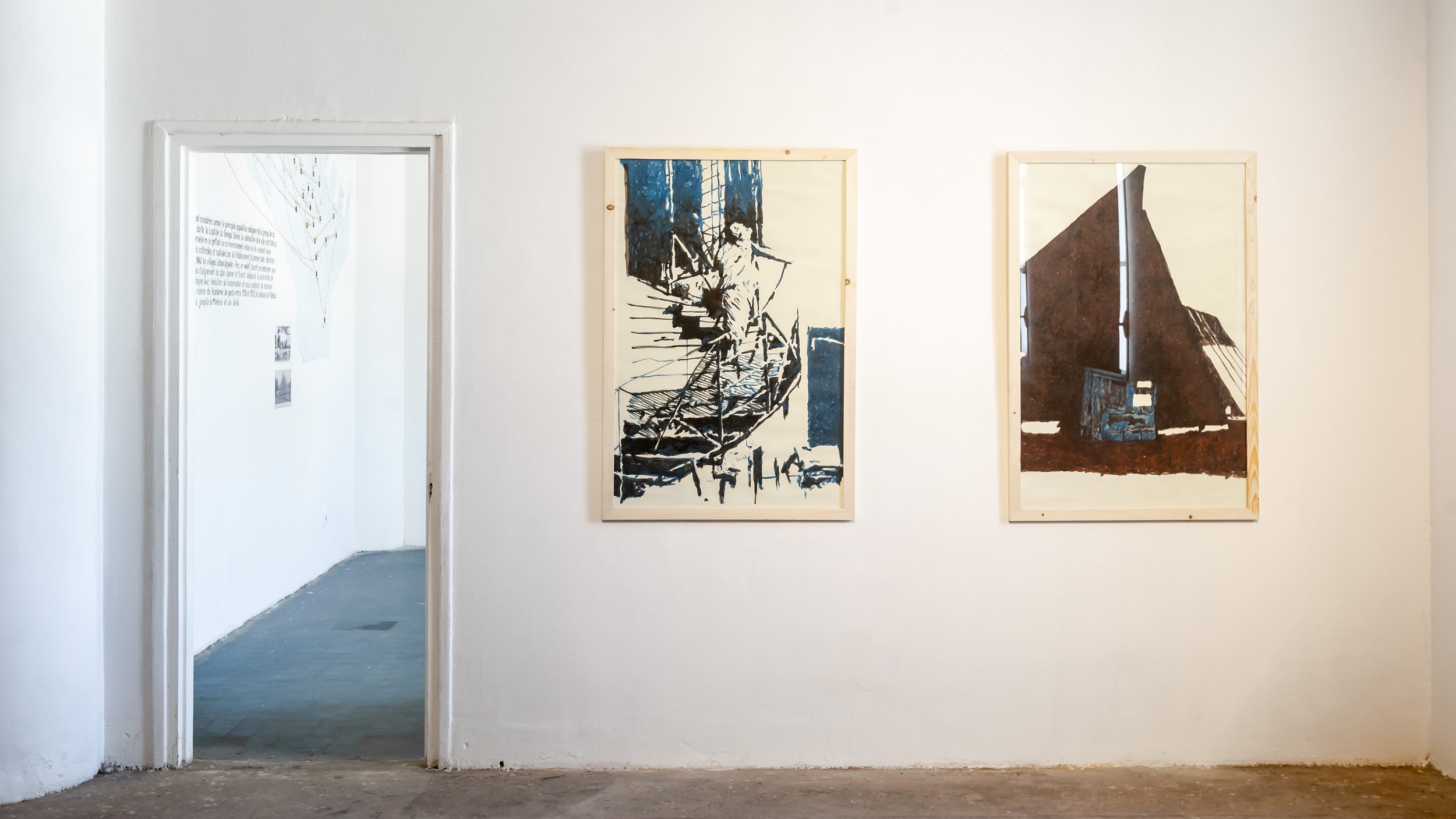
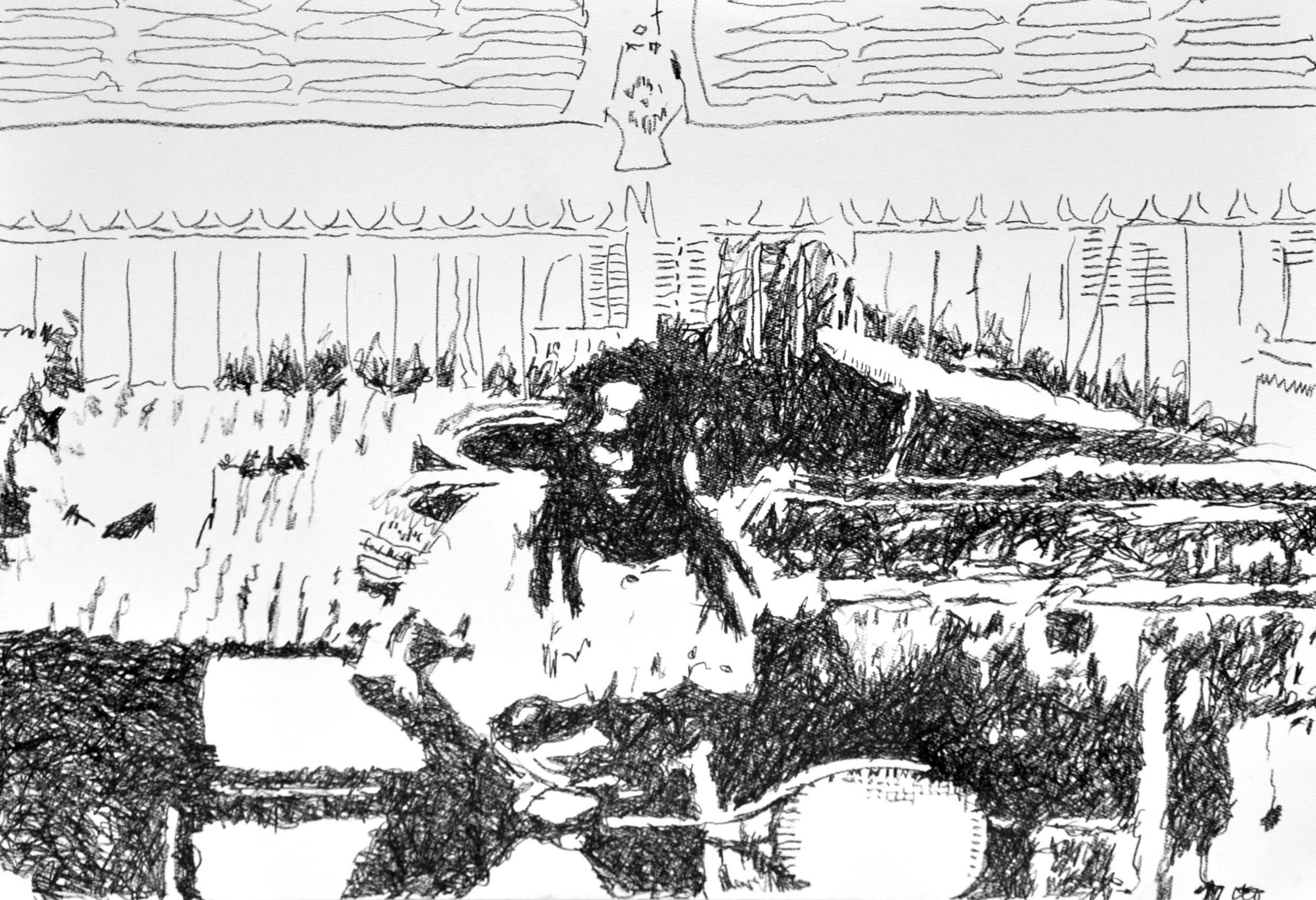
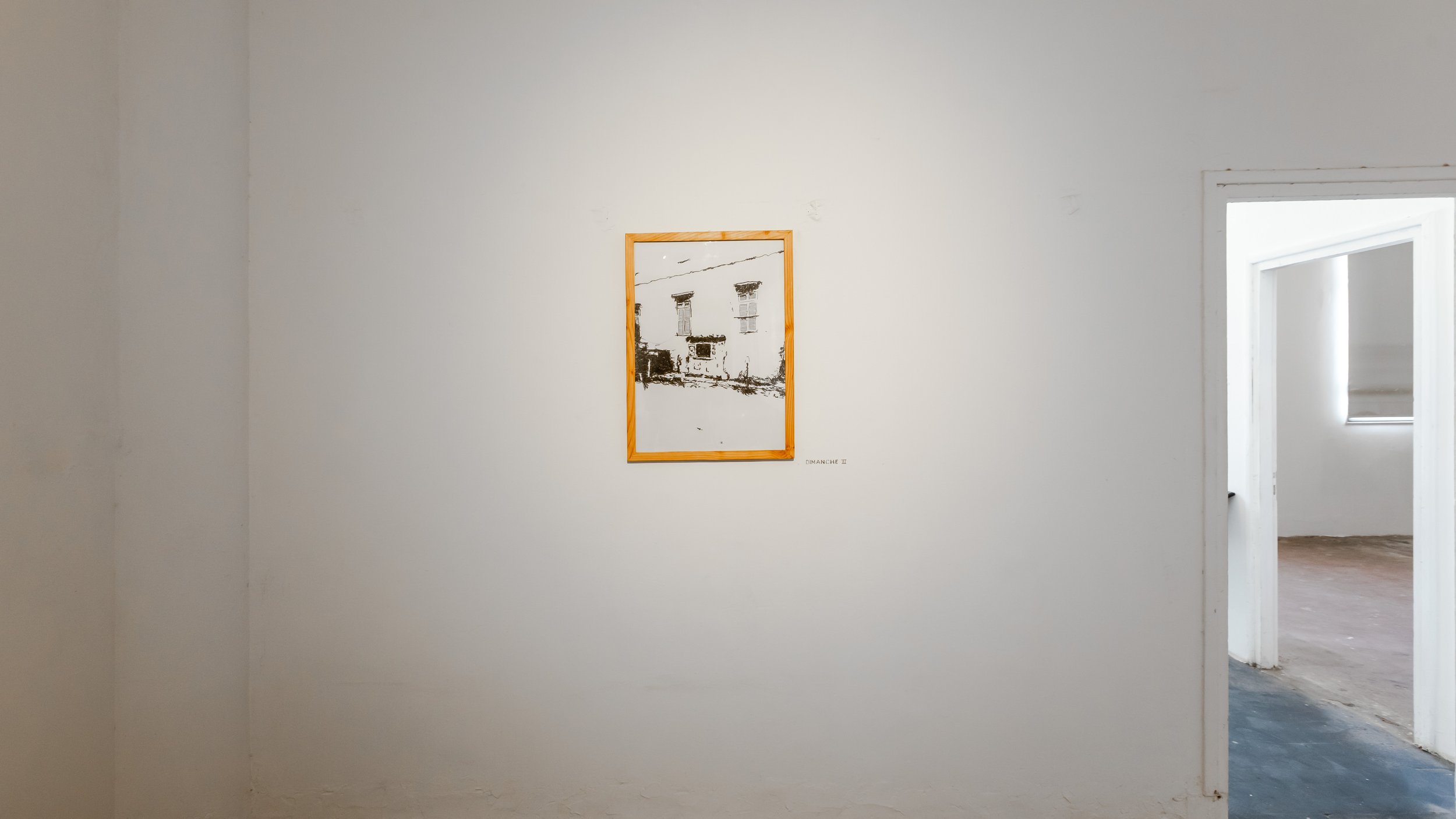
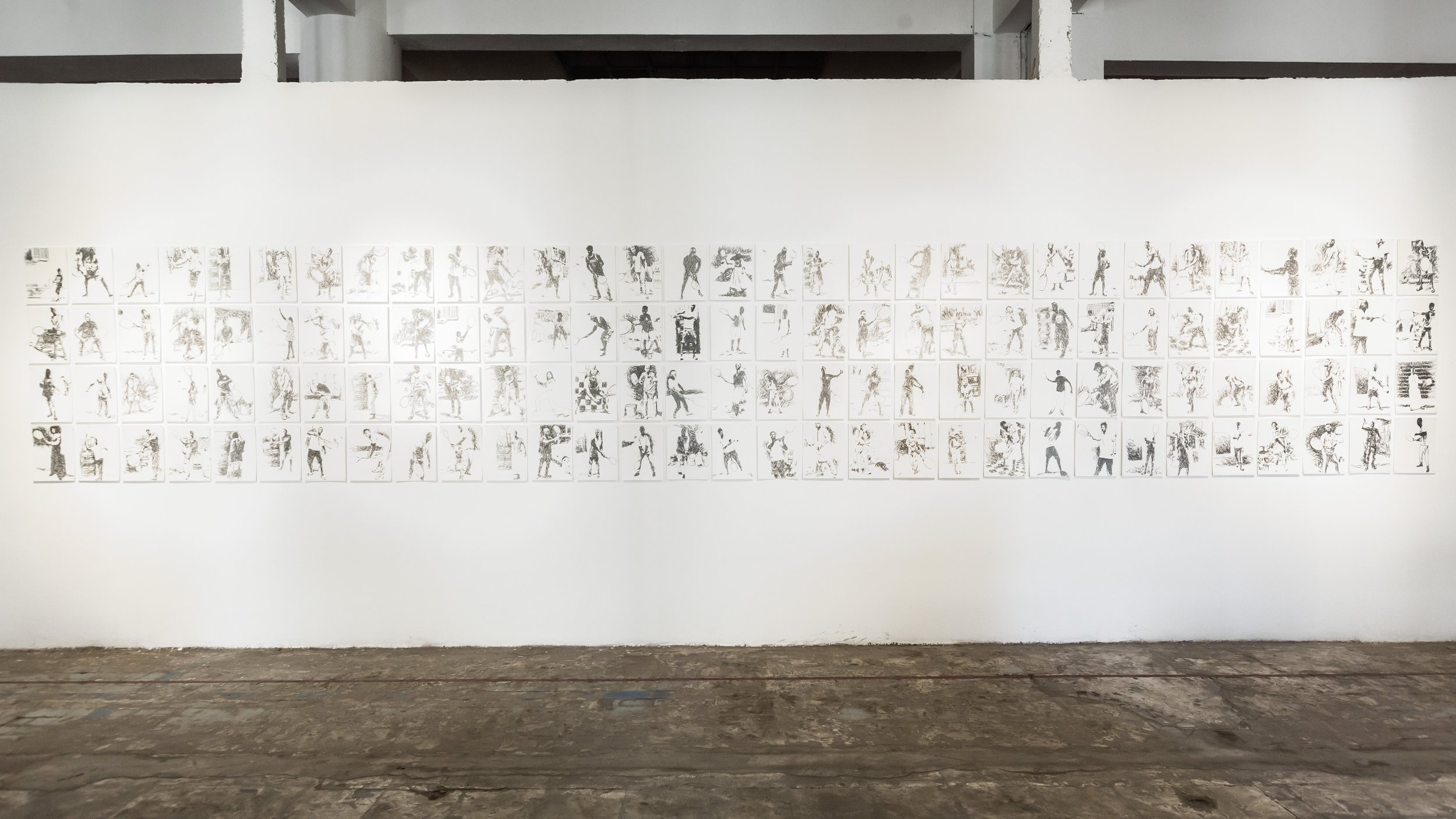
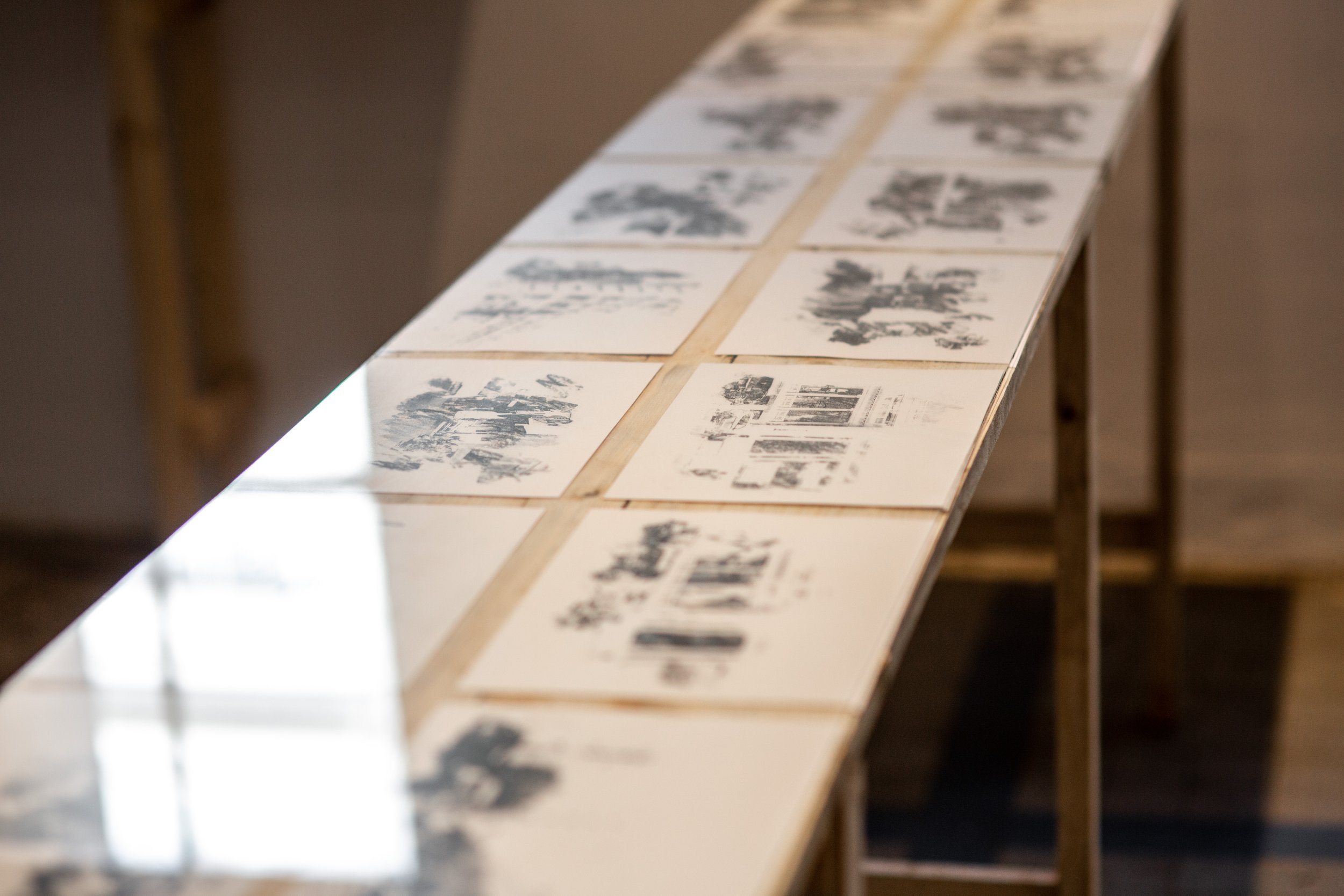
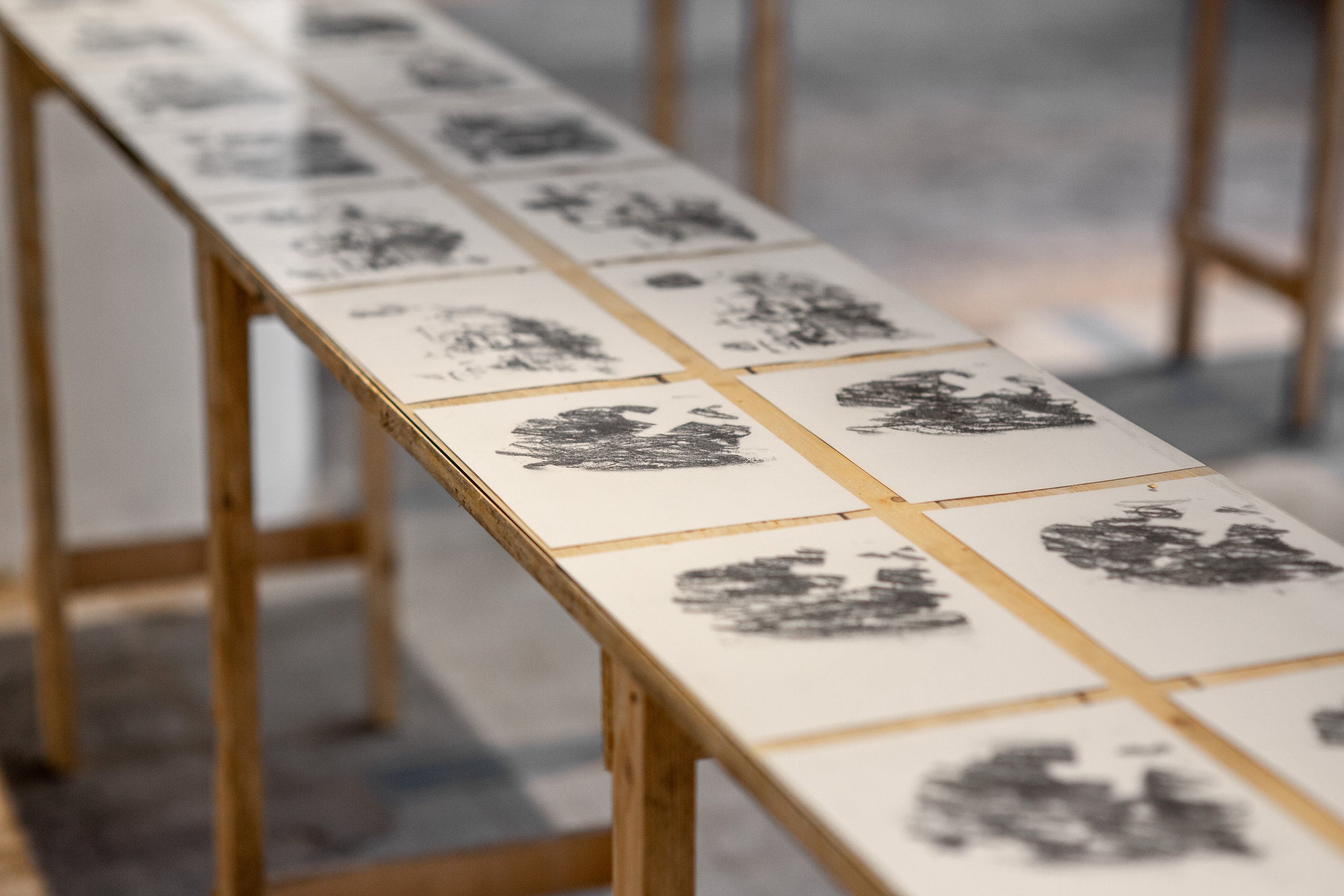
His animated films are made out of thousands of drawings in black and white renderings, produced out of videos that he decomposes into photographs, each transferred with acetone on paper and re-worked with graphite. Page after page, the artist allows silhouettes and details to emerge and reveals the evanescent character of the action and the urban uproar; the ghostly quality of the depicted scenes and individuals. In his paintings and drawings, the artist scribbles and composes his figures out of repeated scrawls made with lead pencil and for the first time colour pigments.
Along the same line as his predecessors that took urban life as the starting point of a visual reflection, such as filmmaker Djibril Diop Mambéty with Contras City” (1969) or Bouna Médoune Sèye with his photographs « Les Trottoirs de Dakar » (1992), Mbaye Diop depicts a “désarchitecture” of the city, a disorganized aesthetic, and the coexistence of various codes and systems.
From Colobane market to that of Kermel, from colonial buildings to old houses; the streets of Plateau to those of Medina, his works offer a vision on spaces of sociability and of urban excess that bury colonial and post-colonial projects under the economic and political reality of today. Metal shelters, constructions in decay, traditional housings appear in his works. All evoke “architectures of survival that grow like parasite plants that cling onto a tree in full growth” according to the artist, and produce counter-balancing forces against new urban rules.
For him, the construction of the city resembles a game that opposes multiple rivals. Therefore, the image of the tennis game is found across his œuvre to echo the competitive state that inhabits the city. A game whose ending is close but that will irrevocably raise questions: will homogeneity triumph? Can multiple modes of living continue to coexist? What will the voices of those that we cannot hear say?
All the works in the exhibition have been created during his two-months residency at Selebe Yoon, except for “Colobane” (2020). The exhibition also presents a work in progress as to display the production process of a future animated film. Finally, an archival room is dedicated to the architecture of Dakar.
A performance between the musician Wasis Diop and Mbaye Diop is scheduled to take place on December 15, 2022.
-Jennifer Houdrouge
Text copyright: Selebe Yoon
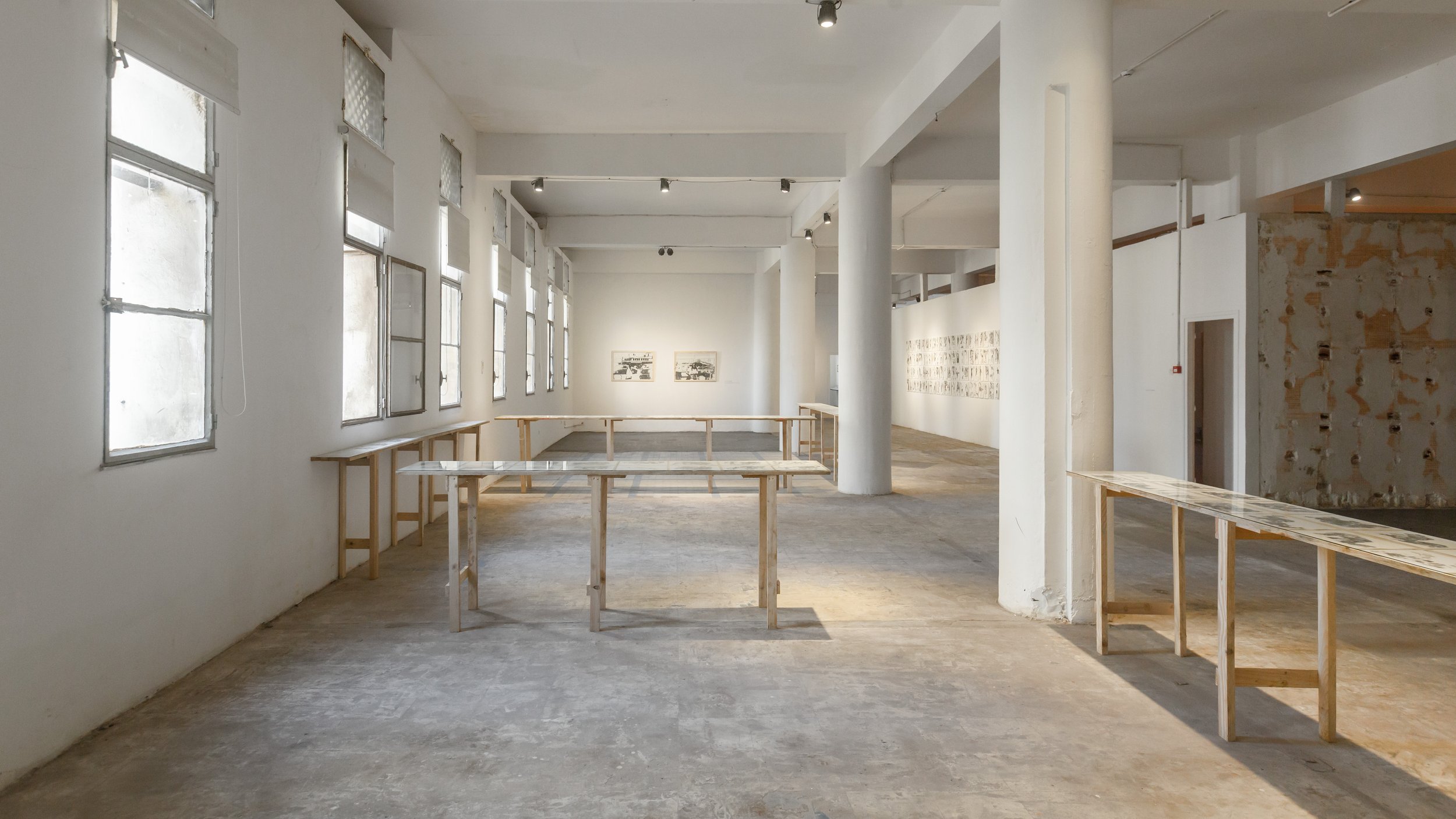
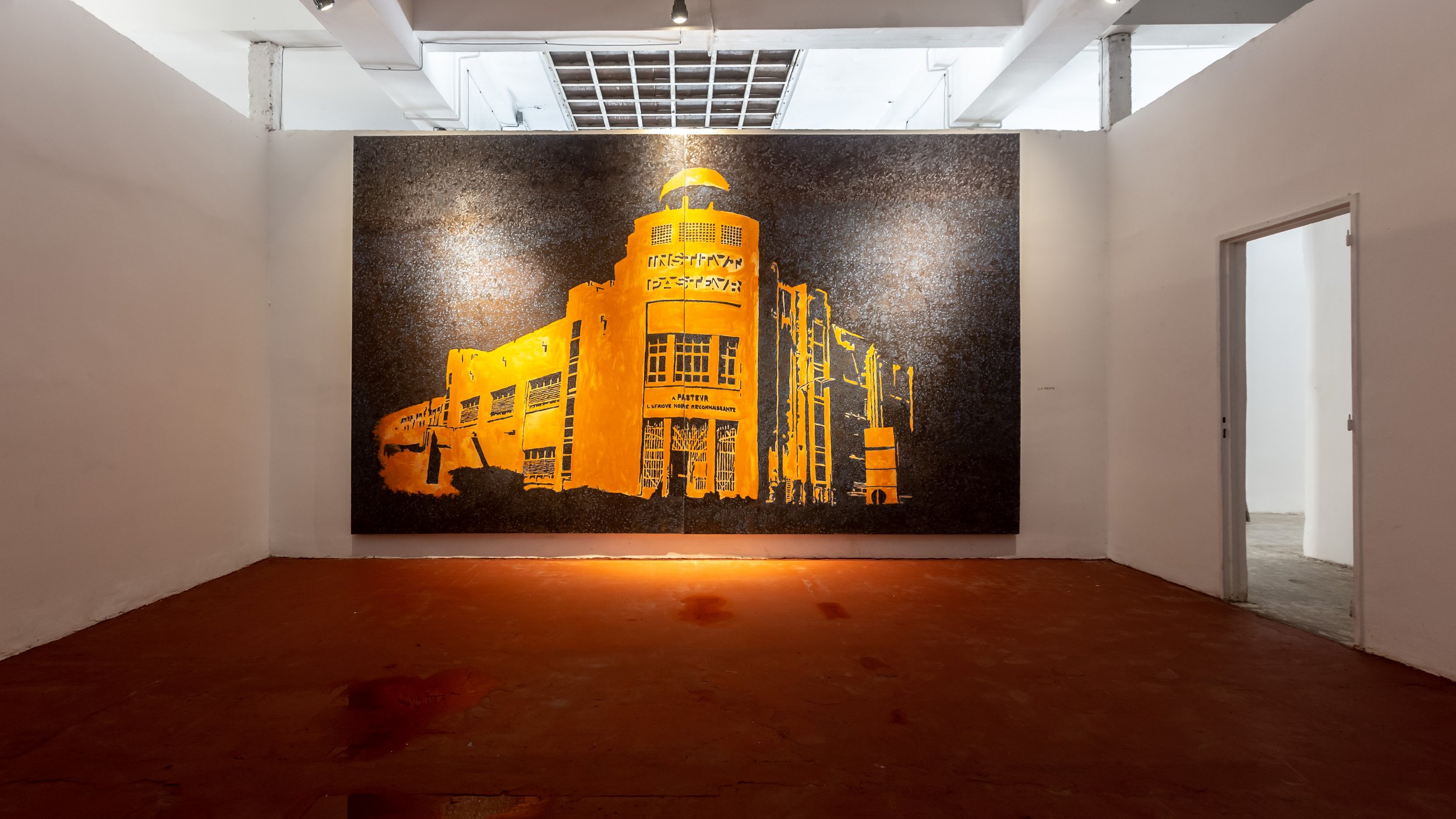
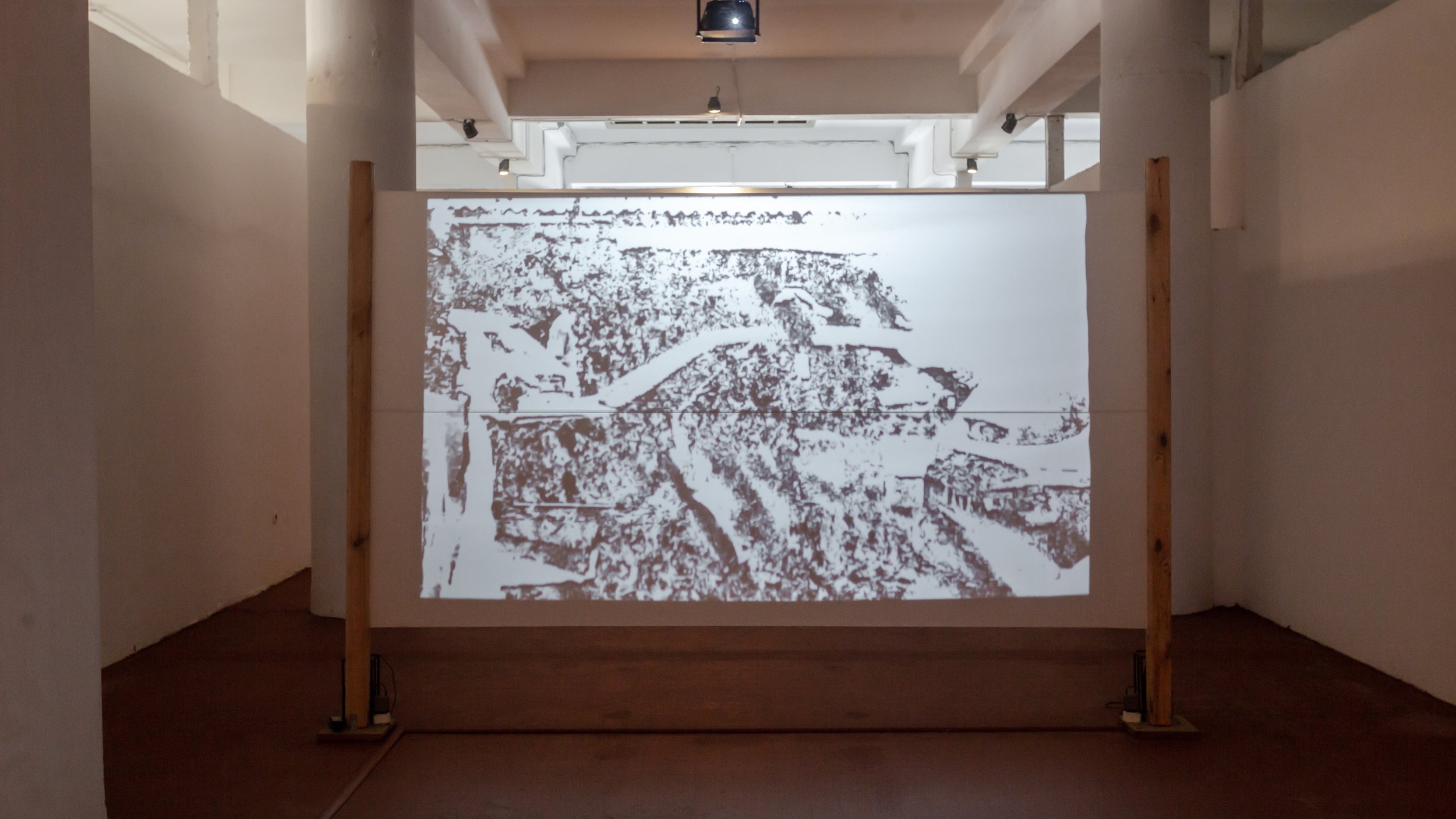
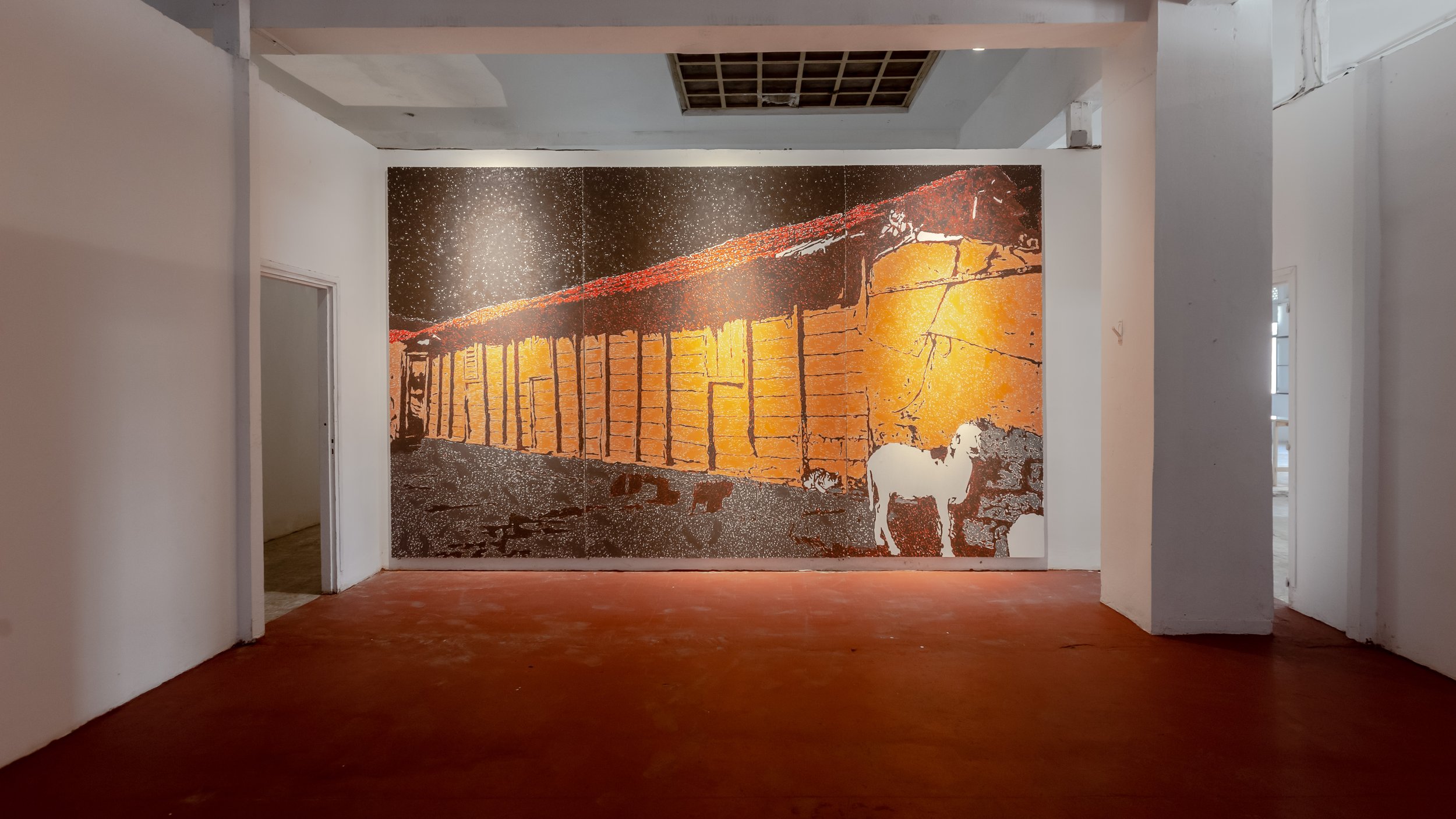
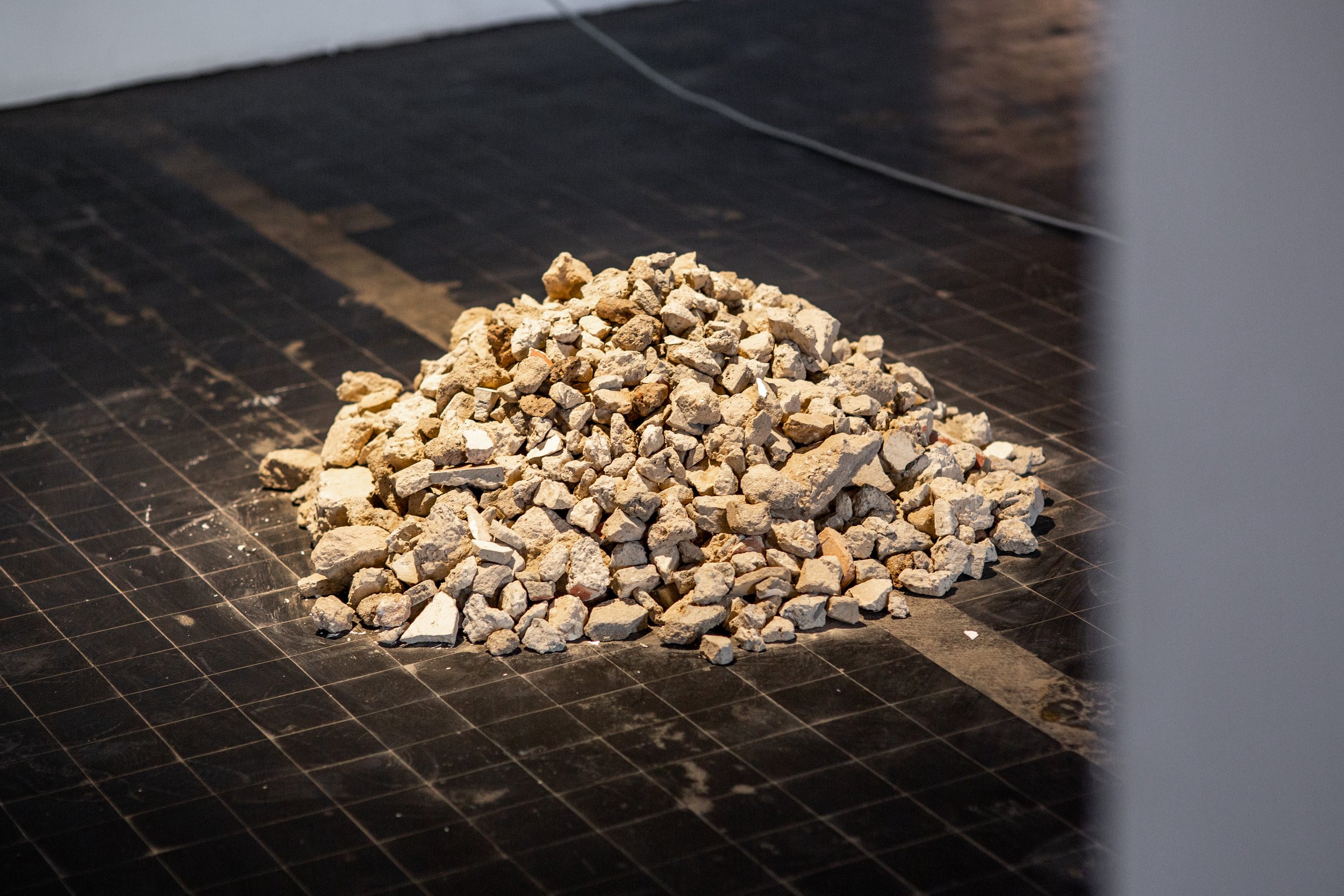
Archive Room
In collaboration with Carole Diop & Nzinga Mboup


For our archive room, Selebe Yoon presents parts of Carole Diop and Nzinga Mboup's architectural research. Since 2018, the duo have undertaken "Dakarmorphose", a series of investigations focused on the genesis of the city of Dakar and its metamorphoses. The Lebou culture and its territorial dynamics are at the center of this investigation as the Lebou are considered the indigenous people of the Cape Verdean peninsula. Their research work has taken the form of several editions, presented at different artistic events including the Dakar Arts Biennale of 2018, the second entitled “Contrast City” at the Dakar Partcours of 2018, the third “Deuk Raw: la Cité Refuge” at the Dakar Partcours of 2019 and finally the one on urban memories of displacement at the Dakar Arts Biennale of 2022. Thus, this archive room at Selebe Yoon traces the displacement endured by the local population and the development of the city, the spatial and cultural functioning of the pencs (traditional Lebou villages) that have resisted the displacement imposed by the colonial administration and two testimonies of descendants of families who lived through the displacement of the Penc from the plateau to the medina in 1914.
Artist Bio

Mbaye Diop is a multidisciplinary Senegalese artist born in 1981 in Richard-Toll, in the north of Senegal. In 2010, he graduated from the National School of Arts in Dakar and taught visual arts in the city of Saint-Louis until 2019. He now lives and works in Switzerland and graduated in a master's degree in contemporary art practices at HEAD Geneva (Haute école d'art et de design) (2022).
He works with various media, including drawing, painting, performance, sculpture, and video, creating site-specific installations. Mbaye Diop’s work has been shown in numerous solo exhibitions, including: "Chaussures Usées", Centre culturel Blaise Senghor, Dakar (2019); "De l'arbre à palabre à l'arbre numérique", La Becque, Tour-de-Peilz, Switzerland (2020); "Autour du poisson" Galerie Skopia, Geneva, (2019); "Introspection", Institut Français, Saint Louis (2018); Wagni Diour espace eeeeh, Nyon, Switzerland (2018); "Colobane", Espace eeeh! Nyon, Switzerland (2020); "Mame Coumba Bang",Théâtre de l'Orangerie, Geneva, Switzerland (2018); espace d'art EEEEH!, Nyon, Switzerland (2018); "Le bon mouton", Institut Français, Saint-Louis, Senegal (2017); Galerie Ethiopique, Saint-Louis, Senegal (2016). His work was also selected in group exhibitions: “Ĩ NDAFFA#/FORGER/OUT OF FIRE”, Official Dakar Biennale, curated by El Hadji Malick Ndiaye for which we received the UEMOA Prize. He is nominated for the The Norval Sovereign African Art Prize of 2023 in Cape Town, South Africa.
His practice has also been the subject of numerous publications such as "De l'arbre à palabres à l'arbre numérique", éditions Ripopée, Switzerland (2019), "Tukki le voyageur", with texts by Saïd Ba, artist book, éditions Ripopée, Switzerland (2018); "Mame Coumba Bang", with students from the Ameth Fall high school in Saint Louis, artist's book, Ripopée Publishing, Switzerland (2018); "Le bon mouton", artist's book, Ripopée Publishing, Switzerland (2018).
He was artist in residence at Selebe Yoon, Dakar (2022); Espace d'art Eeeeh; at the Résidence à la Becque, La Tour-de-Peilz in Switzerland; at the Résidence Trelex, Trelex.
Mbaye Diop is in numerous important public and private collections across the US, Europe and Africa namely, Musée de Nyon (Switzerland), CAAC - Jean Pigozzi Collection (Switzerland), JOM collection (Senegal) to name a few.

Programme public

December 15 from 8-9PM
Dakar, Selebe Yoon
“When we decide to do a performance with a celebrity, we don't do it because the person is famous; we do it because they have turned our lives upside down.”
- Mbaye Diop, Dec. 7, 2022


“Overwhelmed by the visit of this author, composer and performer whom I didn't know in real life. But our family names resonated so much with me; I could not not accept his visit. I still remember when I was twelve, I used to lock myself in the little hut, the cassette of his music in the tape recorder, the volume at the maximum, disconnected from all the sounds that interfered around, in a state of trans. Everyone in the village thought I was crazy. Nineteen years later, by chance, I met this artist on the island of Ngor in Dakar. I saw him but I didn't dare approach him up until the end of his stay. I never had the strength to tell him that I had an immense admiration for his music. Two years later, his latest album came out, "De la Glace dans la Gazelle", which my wife gave me on my birthday. This album was an anthem for me for months. Then something clicked in me: the desire to write on these pieces start to settle in me. From a trip to Paris, I start writing the journey to testify and reinforce his interrogations related to immigration, quite visible on the city of Paris (the island Saint Louis).“ - Mbaye Diop
Wasis Diop
The Senegalese guitarist Wasis Diop holds a special place in African music. Known mainly for his film music, including the admirable Hyènes in 1992, he is also the author of the hit "African Dream" on No Sant (What's Your Name) in 1996. Wasis Diop also composed the song "C'est le dernier qui a parlé" with which Amina represented France in 1991 at the Eurovision Song Contest. "Everything Is Never Quite Enough" is noticed in 1999 on the soundtrack of The Thomas Crown Affair. The acoustic Judu Bék in 2008 shows again the extent of the talent of a great musician with varied inspirations. (Source: Universal Music)