
Exhibition - “The Defeated: The Aesthetics of Resistance 2026” at Bonniers Konsthall, Stockholm
“If we want to take on art, literature, we have to treat them against the grain, that is, we have to eliminate all the concomitant privileges and project our own demands into them. In order to come to ourselves, said Heilmann, we have to re-create not only culture but also all science and scholarship by relating them to our concerns.”
– Peter Weiss, The Aesthetics of Resistance
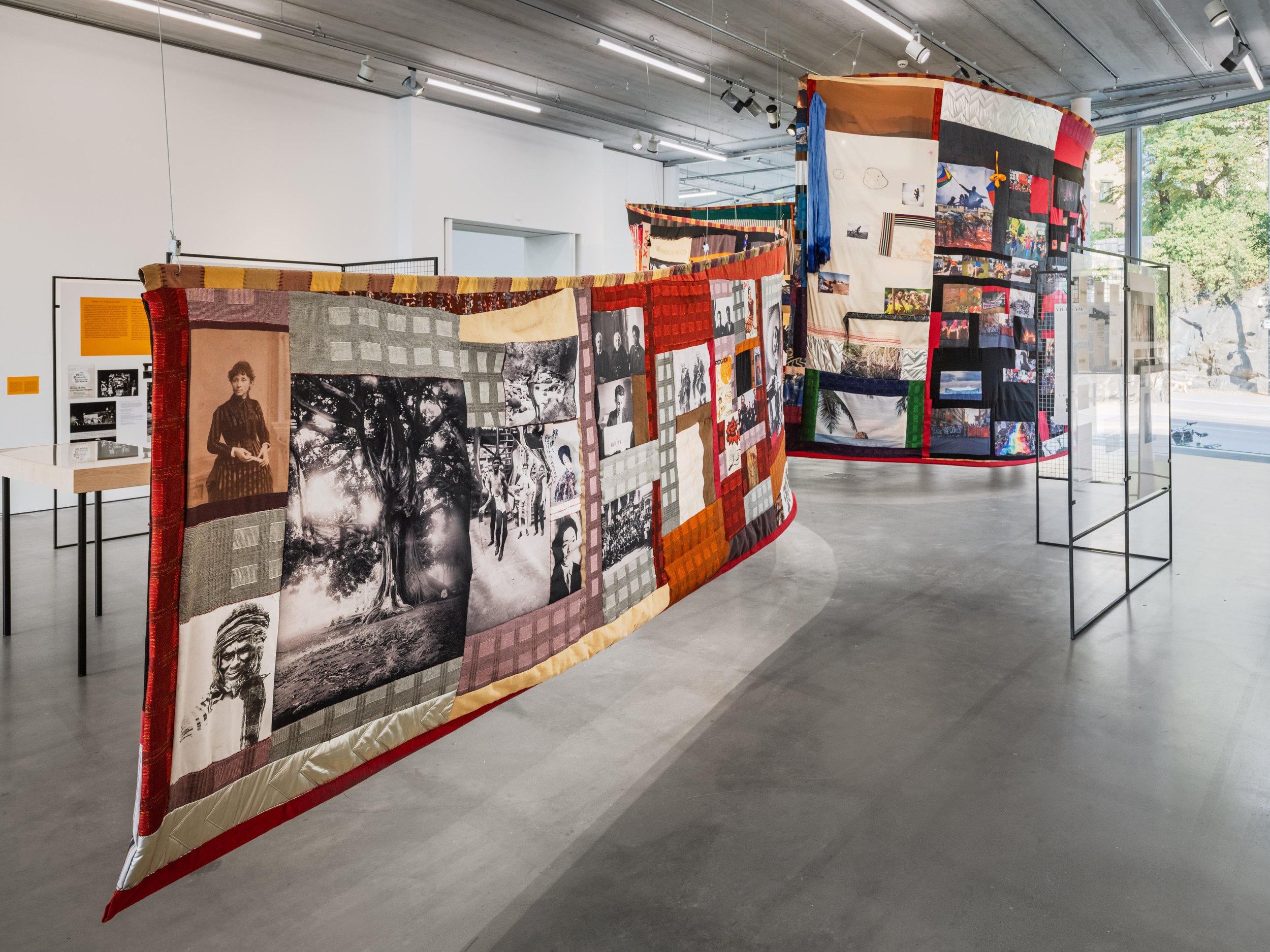
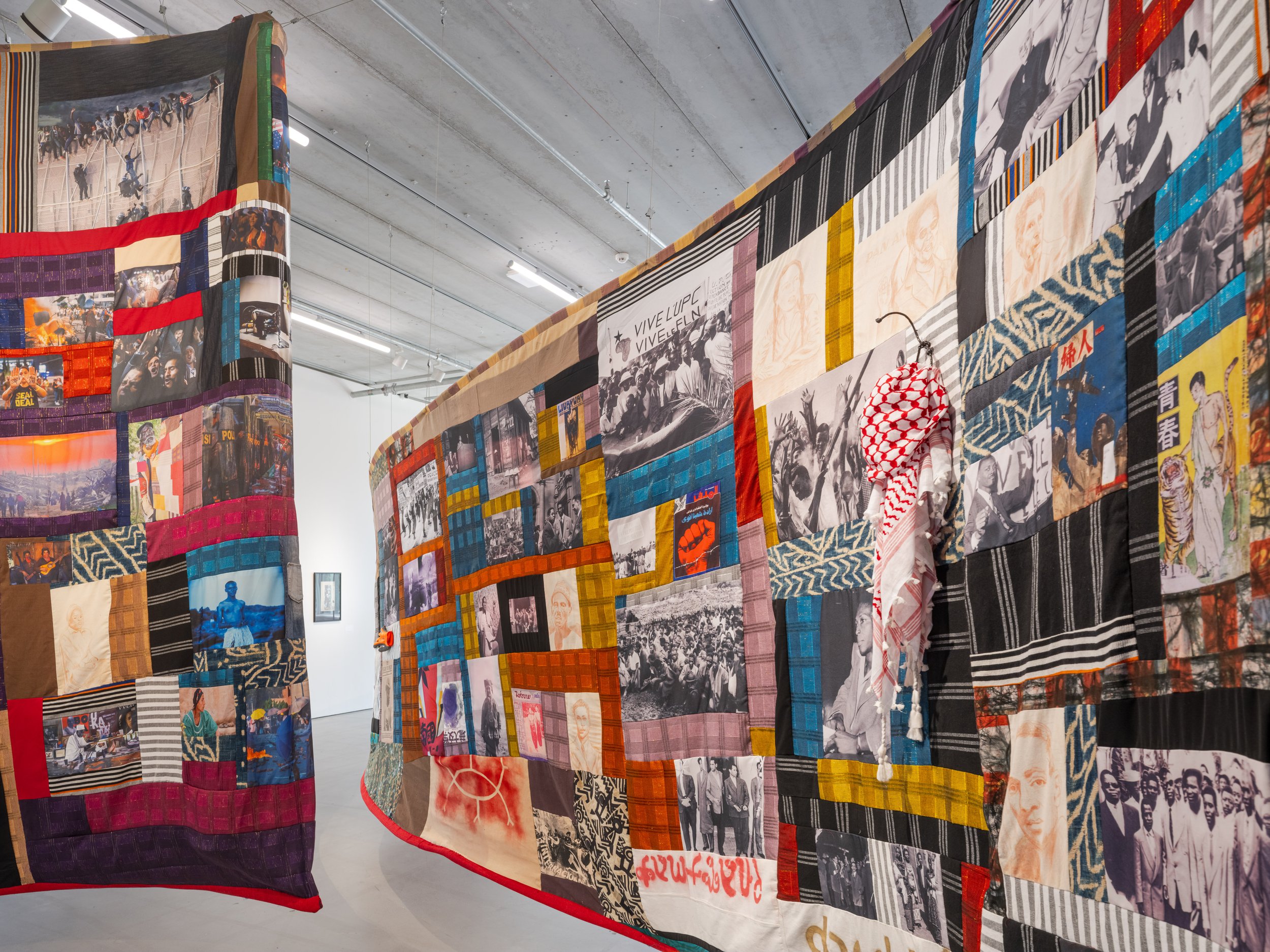
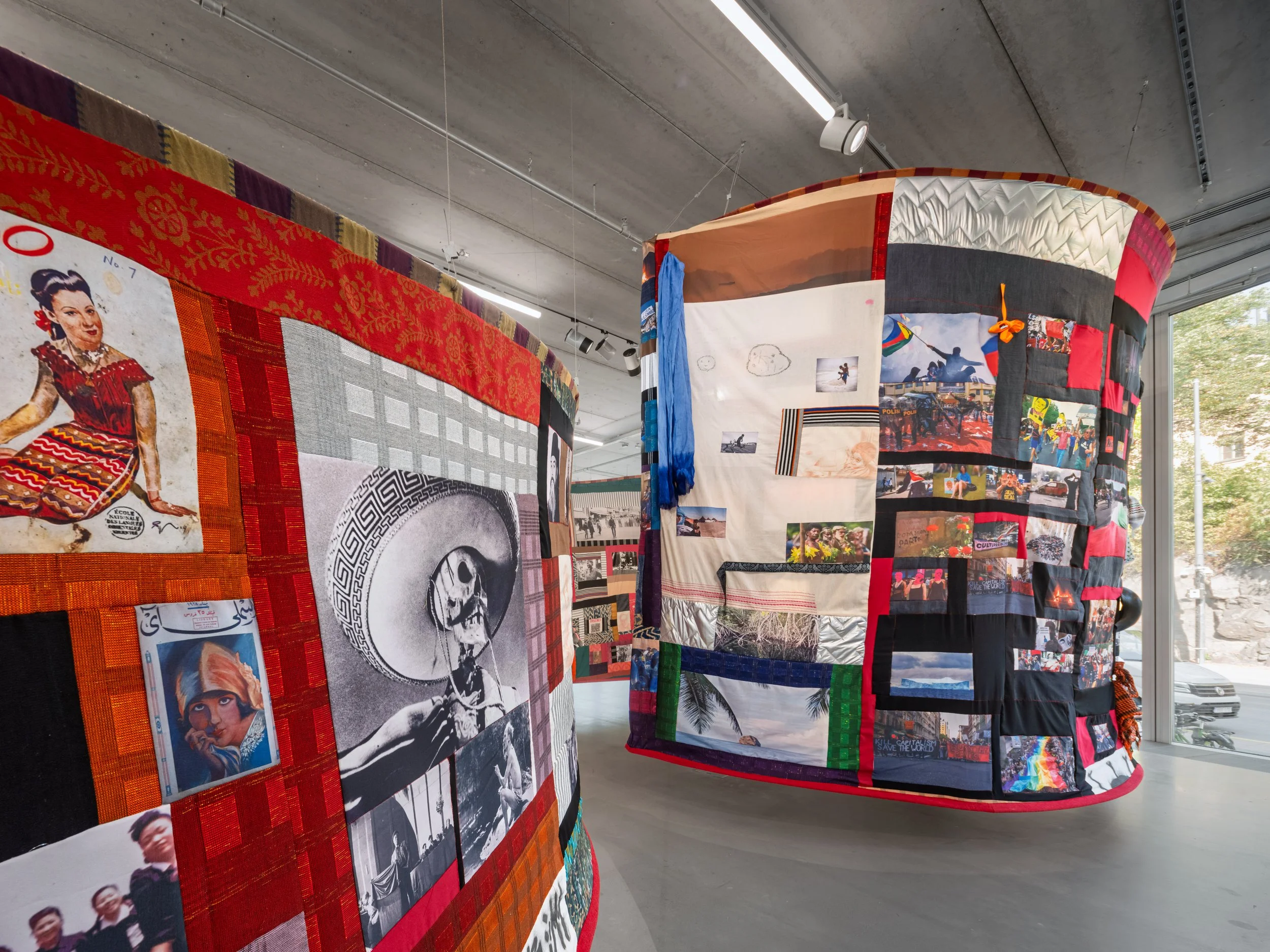
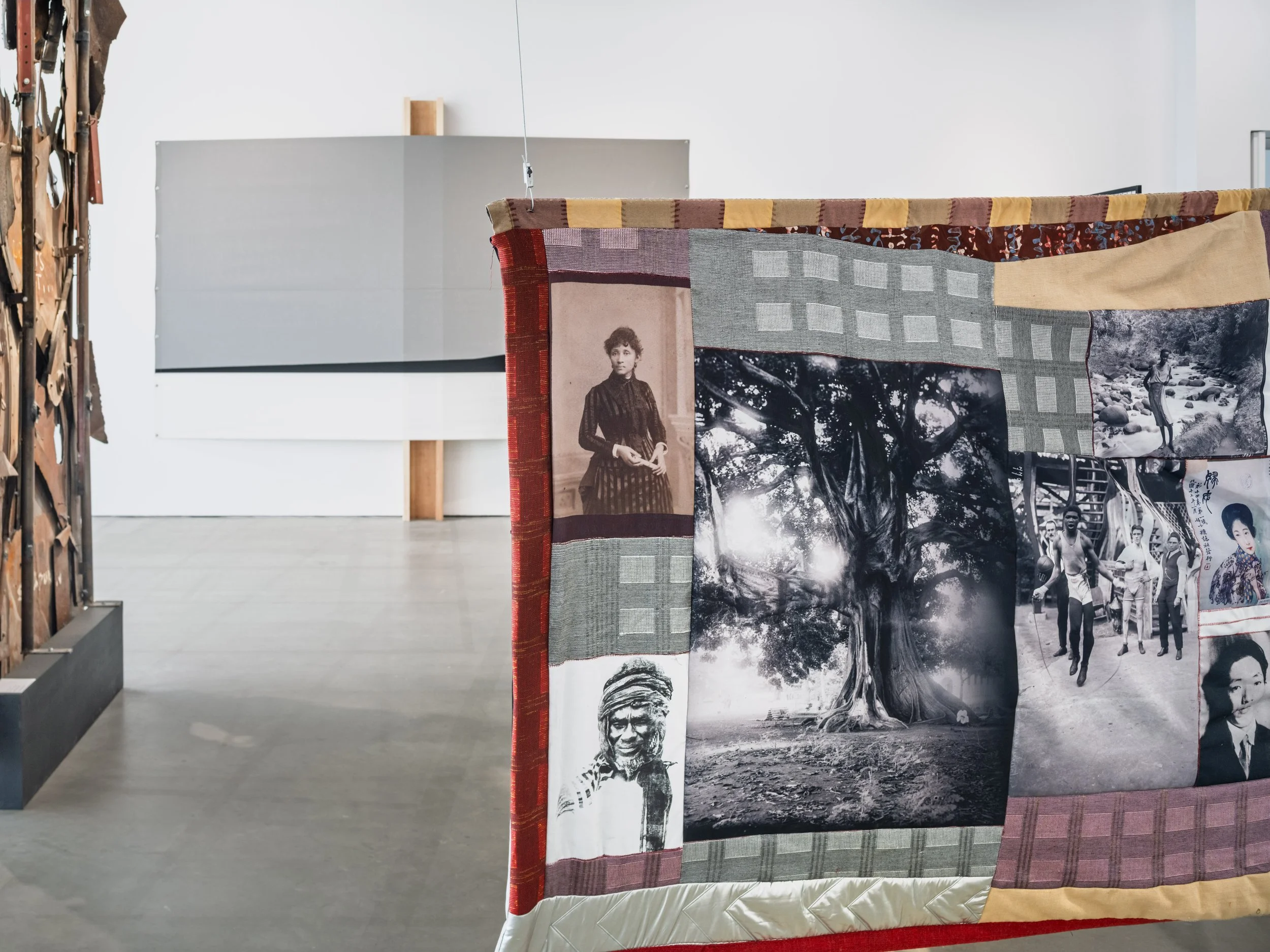
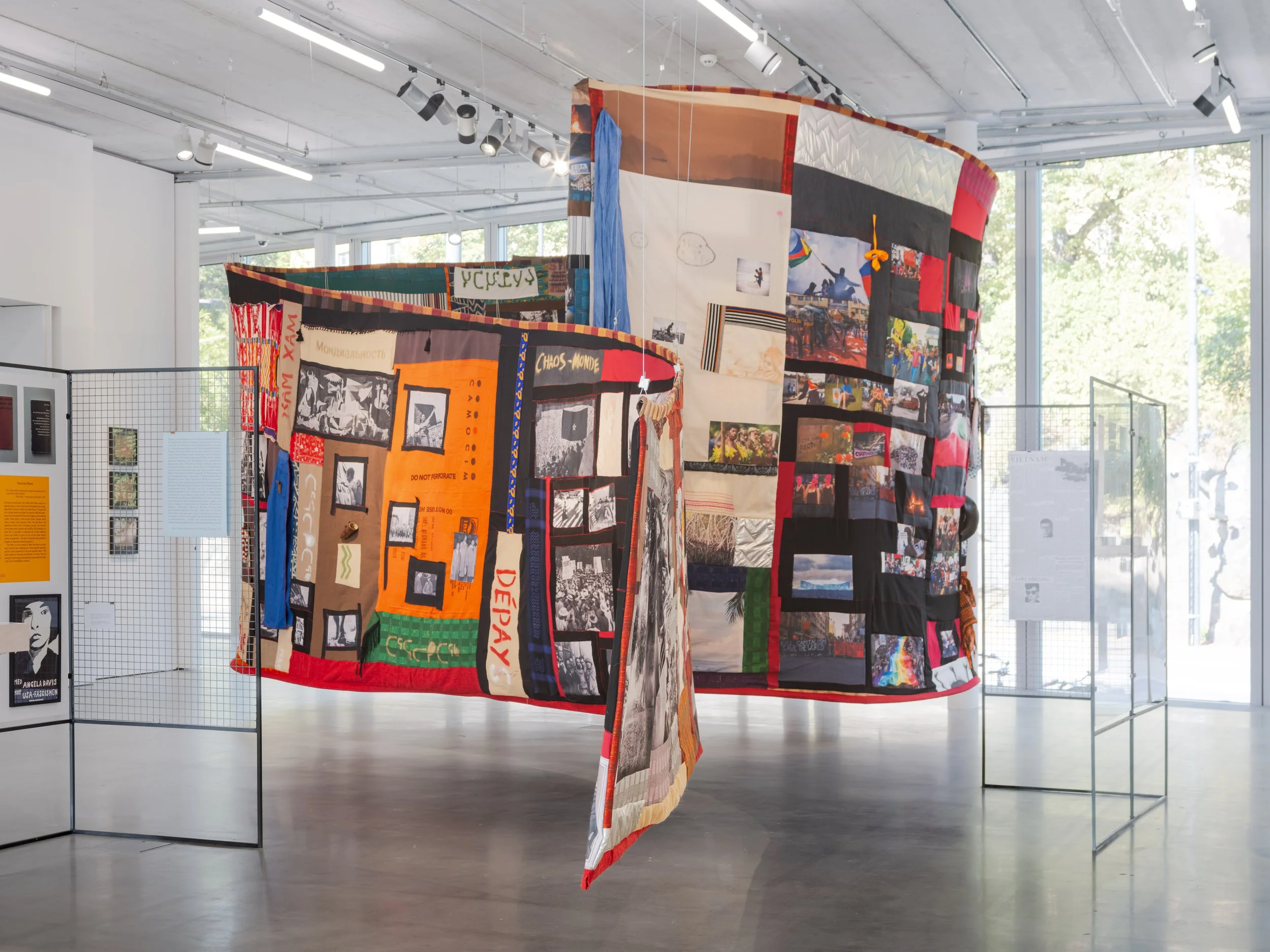
Bonniers Konsthall in Stockholm presents a group exhibition that draws on the novel The Aesthetics of Resistance (1975–81), by the Swedish-German author, playwright, and artist Peter Weiss, curated by François Piron and Kim West. On this occasion, Hamedine Kane and Valérie Osouf from The School of Mutants and Cheikha Sigil unveil ´Where the Seams Hold Against the Fixed Narrative’, a new work created in collaboration with Caroline Blache, Sène Cissande, Corinne Blouet, Ange Petit.
“The filmmaker Valérie Osouf and the visual artist Hamedine Kane are both members of the School of Mutants, an international artists’ collective named after a utopian university founded in the late 1970s by Senegalese president Léopold Sedar Senghor on the former slave trading post of the island of Gorée. Osouf and Kane’s contribution to the exhibition, Where the Seams Hold Against the Fixed Narrative (2026), takes the shape of a large assemblage of textile installed as a boat sail, evoking Géricault’s painting Raft of the Medusa (1819), to which an extended interpretation is devoted at the beginning of the second volume of Peter Weiss’s The Aesthetics of Resistance. The painting represents the surviving crew of the shipwrecked French boat Medusa, drifting on a raft near the Mauritanian coast. Weiss describes the black man at the top of the raft as ”the only one to have a free space in front of him,” and understands Géricault’s painting not only as an antiracist statement, but also as a dream of the end of oppression amidst the most appalling tragedy. Kane and Osouf wish that their multi-faceted sail not only reflect the perspective from the raft but also of the people on the African coast.
The artists respond to Weiss’s documentary editing practice in The Aesthetics of Resistance and sew together myriad of images that relate to liberation and emancipation movements, past and recent struggles, and portraits of well-known or anonymous heroes and heroines. They connect different times and geographies to revive the networks that composed the forces of internationalism, panafricanism, tricontinentalism and other alliances that tied together the peoples and the movements that some once considered the defeated.”
- François Piron
Photo: Bonniers Konsthall (Jean‑Baptiste Béranger)