80-90, Deviation
Issa Samb, El Hadji Sy & Kan-Si

80-90, Deviation
Issa Samb, El Hadji Sy & Kan-Si November 6th, 2026– March 27th, 2027
Opening November 18, 2026 6pm-9pm
Alongside the 16th Dakar Biennale, Selebe Yoon presents “80-90, Deviation”, a group exhibition bringing together historical works created during the 1980s and 1990s by Senegalese artists Issa Samb (1945–2017), El Hadji Sy (b.1954), and Amadou Kan-Si (b.1961).
Belonging to three different generations, each of them asserted, in his own way, an aesthetics of rupture at the end of the 20th century, while simultaneously redefining the artist’s place and social function through various collective initiatives, including the Laboratoire Agit’Art (1974), the Village des Arts (1977), Tenq (1980), and the Huit Facettes collective (1996), deployed on both a local and international scale.
Painting with their feet or hands, piercing the surface of the canvas, allowing works to evolve through continual exposure to natural elements and the city, freeing oneself from the frame: all three artists experimented with a wide range of materials and gestures, turning painting into a true space of action. From the 1970s onwards, the elders, Samb and Sy, opposed both the cultural ideology of Négritude championed by Léopold Sédar Senghor and the formalism of the École de Dakar. Upon graduating from the Beaux-Arts de Dakar in 1991, Kan-Si affirmed the need for artists to self-organize and create their own frameworks for action. At different moments, each artist thus restored art’s social resonances, its entanglement with local realities, and its power to provoke political upheaval.
Issa Samb
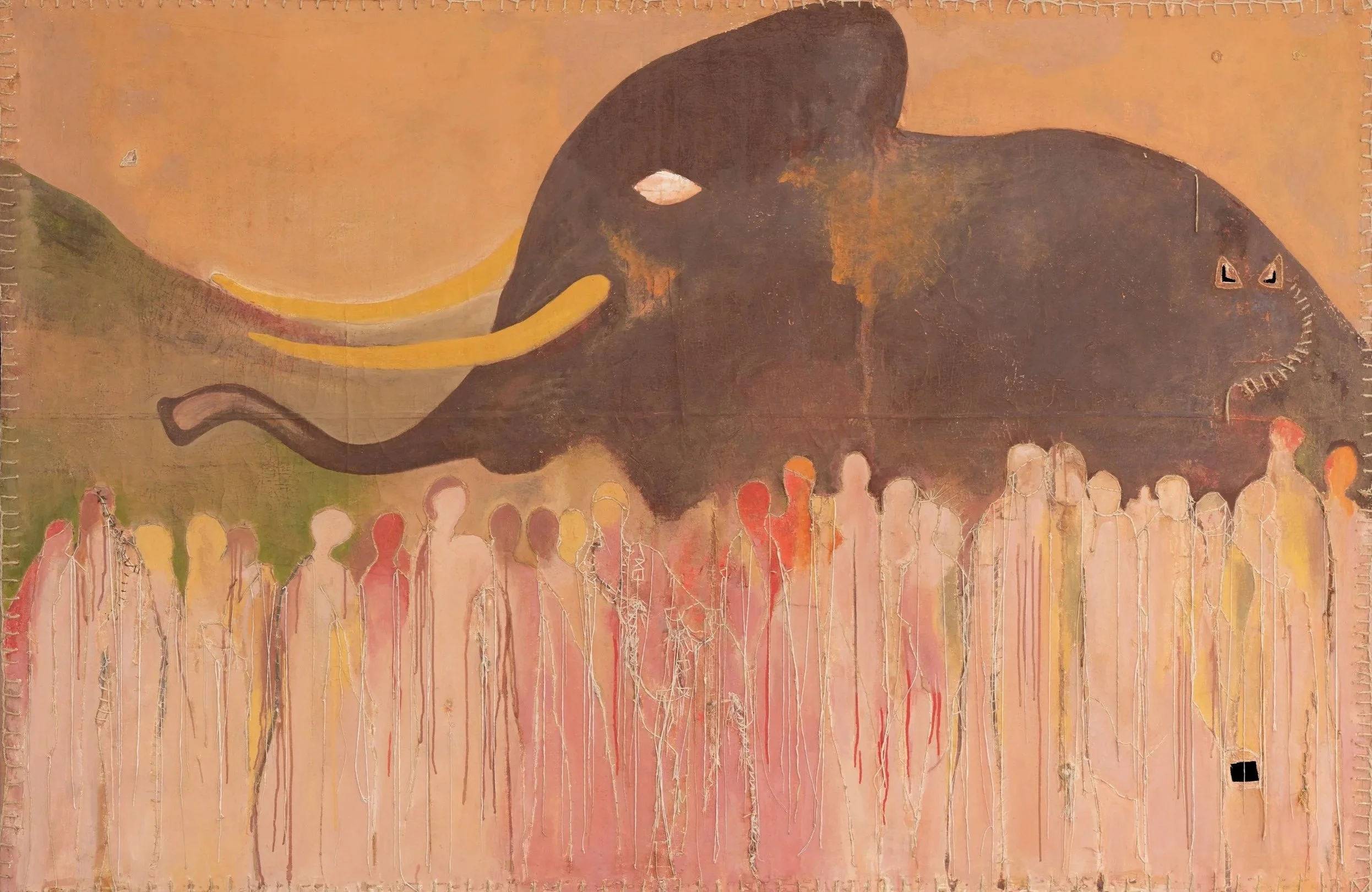
A philosopher, theater practitioner, artist, and poet, Issa Samb (also known as Joe Ouakam) is inseparable from his courtyard-studio located at 17 Rue Jules Ferry in downtown Dakar, where he lived and worked for nearly fifty years. Starting in the 1970s, his courtyard became a place of gathering, political thought, and artistic experimentation. Crosses, canvases, swaddled figures, pieces of wood, tree leaves, clothing, various furniture, sculptures, and found objects were continuously moved, altered, and recomposed within it. The works brought together in this exhibition—most of which cannot be precisely dated—emerge from this same heterogeneity of materials and supports.
Samb’s works bear the traces of this perpetually shifting place, of its successive transformations, and of those who passed through it, as they have lived alongside the artist for many years. They also embody the political concerns of the time, the artist's spiritual and philosophical thoughts, and his daily gestures, which amounted to a form of continuous performance.
One work in particular resembles a collage formed through successive accumulations: newspaper, shimmering aluminum foil, book pages, cardboard, industrial paint, and other elements are incorporated onto its surface. Other, more figurative, works are composed of threads and knots acting as connecting links between figures and, more broadly, between individuals and peoples. Sewing recurs in several works—including “La Marche du Peuple” (The People’s March), 1996—also attests to a practice shaped by exchange and collaboration, notably with the artist Alioune Diouf, who lived, assisted, and worked alongside Issa Samb for over thirty years.
Joe Ouakam is Issa Samb’s pseudonym, Ouakam being the Lébou neighborhood where he was born.
El Hadji Sy
Throughout his career, El Hadji Sy has combined political activism with artistic and curatorial practice. As a head of the painting and costume workshop within the Laboratoire Agit’Art, he was also responsible for the collective’s visual dramaturgy.
At once close to Senghor and dissident toward his cultural policy, Sy developed a pictorial language characterized by large, brightly colored spirals, plant-like volutes, and organic forms that, at times, conjure human presence in motion. He has used a multitude of unconventional supports, such as kites, flags, transport bags, screens, mirrors, or glass, conceiving his works as theatrical objects:mobile and transportable, like a travelling “circus,” able to fold and unfold upon itself. In what Philippe Pirotte has described as a “provocative gesture”, against the Western tradition of easel painting taught at the École des Beaux-Arts in Dakar, Sy’s early works were born from the act of walking, stomping, and dancing with bright colors across the canvases or sheets of cardboard placed directly on the floor. In this way, he restored painting's performative function by imprinting traces of his body onto surfaces. Like an actor entering the stage, he produces what he calls an entrée en peinture (“entry into painting”) in which the traces of the artist’s body disrupt the institutional body.
From the mid-1980s and onward, El Hadji Sy began using jute rice sacks as a support. Typically used to transport everyday consumer goods, the sacks were unstitched, flattened, sewn together, and invested with his undulating forms. By linking painting through the material itself to commodity circuits, he situated it both in the daily lives of Senegalese people and in broader globalized systems of circulation, exchange, and consumption. Through his choice of this ordinary material, these works remain deeply rooted in Senegal’s economic realities, at a time of profound economic decline, placing the conditions under which art is produced at the centre of artistic inquiry.
Like banners, the works are suspended from bars, freed from the rigidity of the stretchers and frames. This choice is an irreverent response to the manufactures of Thiès and the tradition of tapestries commissioned and supported by the State, challenging both the logic of official patronage and their decorative, prestigious character. In place of monumentality and fixity, Sy proposes works that are flexible and mobile: suspended, foldable, transportable, and capable of being installed elsewhere.
Amadou Kan-Si
From his participation in Tenq in 1994 and 1996─workshops bringing together Senegalese and international artists─to the creation of Huit Facettes in rural areas in 1996, Kan-Si became involved early on in collective experiments aimed at imagining and actively testing new working frameworks for artists—an approach he continues to pursue today.
Upon graduating from the Beaux-Arts in 1991, he observed a social fabric thrown out of balance, subjected to new forms of precarity and restructuring whose effects he questioned within the postcolonial context. These concerns emerged in an era in Senegal marked by the social consequences of structural adjustment policies initiated in the 1980s under the presidency of Abdou Diouf, notably with the intervention of the International Monetary Fund and the World Bank. Kan-Si translated this feeling of imbalance and fragmentation into pictorial form through his series “Déstructurées”, which he exhibited alongside poems at Galerie 39 in 1992.
Assemblages of wood, canvas, and cardboard, the works fracture the pictorial surface and dismember the rectangular shape of the traditional frame. Through an interplay of voids and solids, geometric forms, and nested perspectives, these create a spatial disorientation that echoes the social, political, and economic instability Senegal was experiencing at the time. Slanted pieces of wood or bamboo split the canvases, while oval cutouts expose either empty space or fragments of corrugated cardboards.. Sometimes built up in multiple layers, the surface is occasionally incised with geometric shapes that repeat, shift, and respond to one another from different angles across the pictorial plane. These dislocated paintings may also evoke barricades or small structures like doors or windows, granting this formal deconstruction an urban resonance.
At the same time, the colors are drawn from the artist's immediate environment: the ochre and earth tones of certain works, the celestial blues of others, situated these formal experiments within the landscape in which they originate. The painted surfaces offer glimpses of abstract forms, where the elusive silhouette of a body seems to appear, only to later disappear into the vacant space created within the work, as in “Déstructuré I” (1996). Kan-Si’s work is thus constructed as much through its openings, reliefs, and forms as through what it refuses to reveal.
© Text copyright: Jennifer Houdrouge
November 6th, 2026– March 27th, 2027
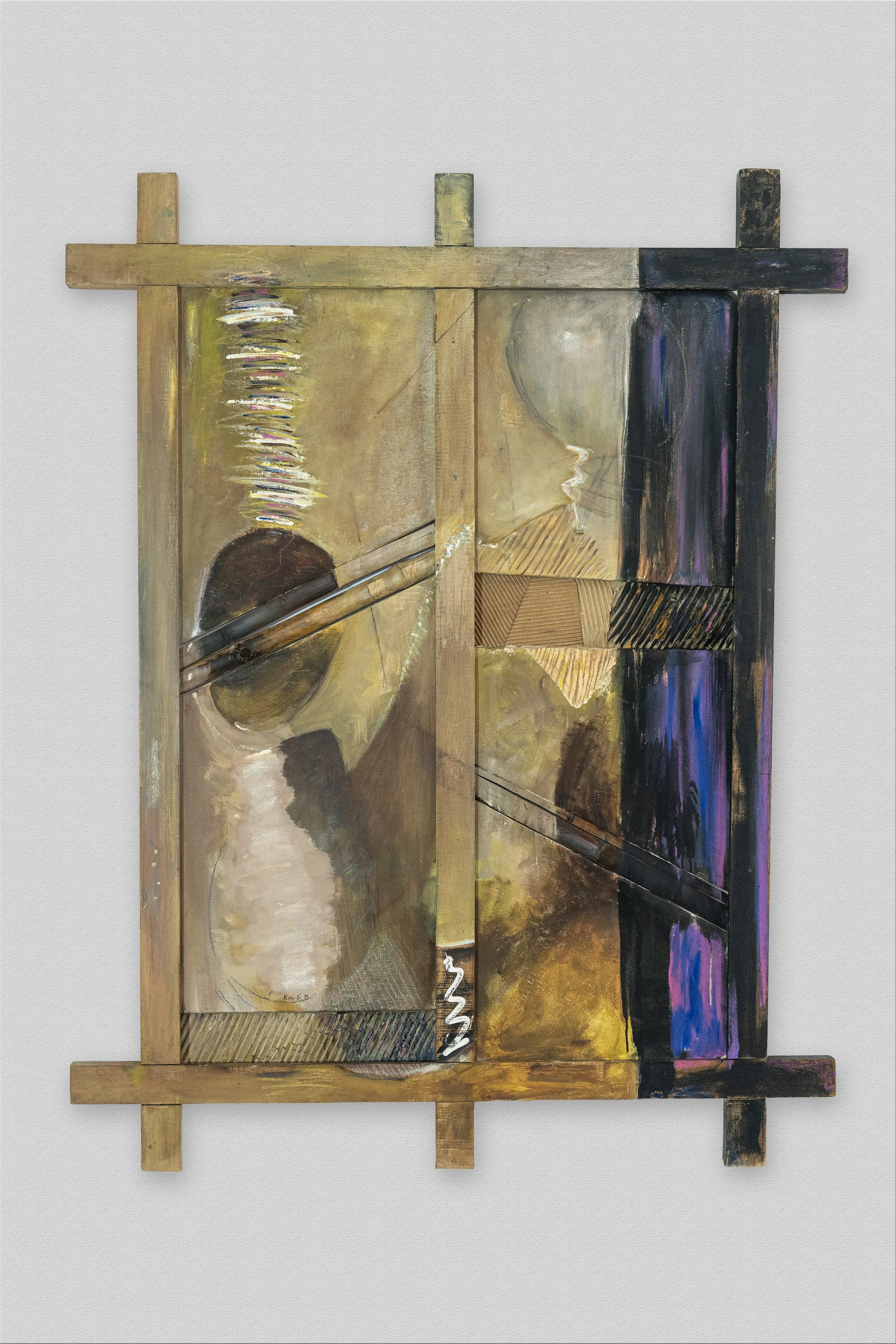
Kan-Si, Destructuré, c1990. Acrylic and oil pastels on linen canvas, wood and wooden structure, 139,2 x 179 cm. Photo: Khalifa Hussein
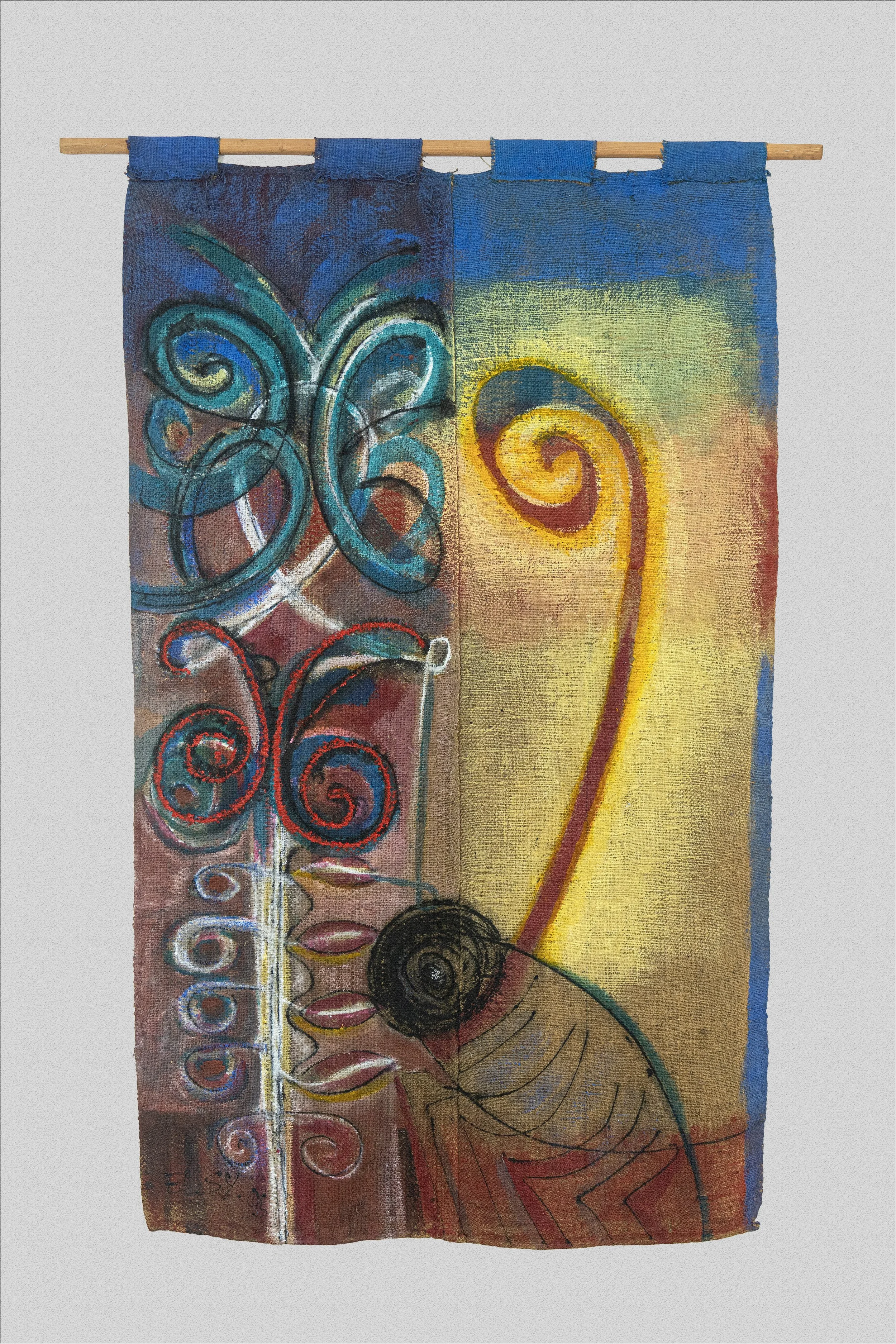
El Hadji Sy, Untitled, 1994. Acrylic on jute sack, 70x100cm. Photo: Khalifa Hussein
Artist’s biographies
Issa Samb
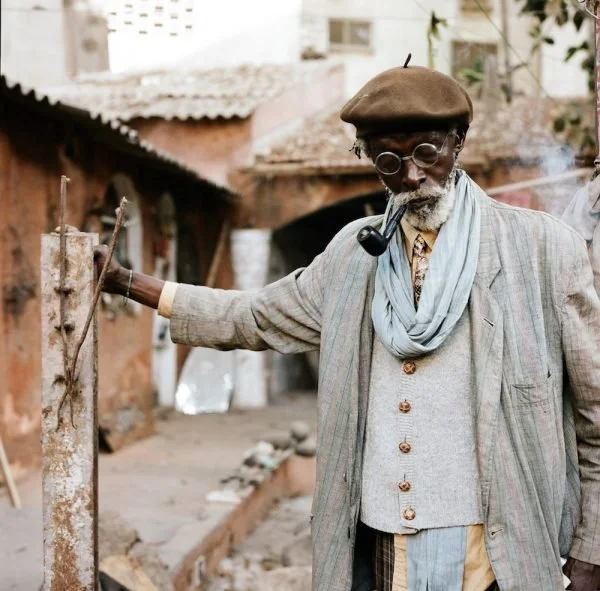
© Sophie Thun
Issa Samb (1945–2017), also known as Joe Ouakam, after the neighbourhood where he grew up in Dakar, was a Senegalese sculptor, painter, actor, critic, author, poet, playwright and philosopher As a co-founder of the first artist’s collective on the African continent, Laboratoire Agit’Art, in 1974, Issa Samb rejected conventional institutional frameworks in favour of ephemeral interventions, political engagement, and interdisciplinary experimentation, in a deliberate refusal of categorization to fully embrace creative freedom. He is the co-founder of Village des Arts in Dakar and TENQ space.
Central to his artistic philosophy was his open-air studio courtyard in Dakar—a legendary, living installation where assembled found objects, performance, and vibrant intellectual exchanges continuously blurred the boundary between art and daily life, a completely immersive way of living in constant evolution.
Issa Samb exhibted his works outside official institutions, the Courtyard at 17, rue Jules Ferry often becoming an open-air museum for over fifty years. In 2010, Dakar’s National Gallery organised his first retrospective. . His works were part of major collective exhibitions: such as in"Africa 95" at Whitechapel Gallery, London in 1995, curated by El Hadji Sy. In 2026, his work and life are highlighted at the 61st Venice Biennale, “In Minor Keys”, first conceptualised by the late Koyo Kouoh, who was close to Samb.
El Hadji Sy
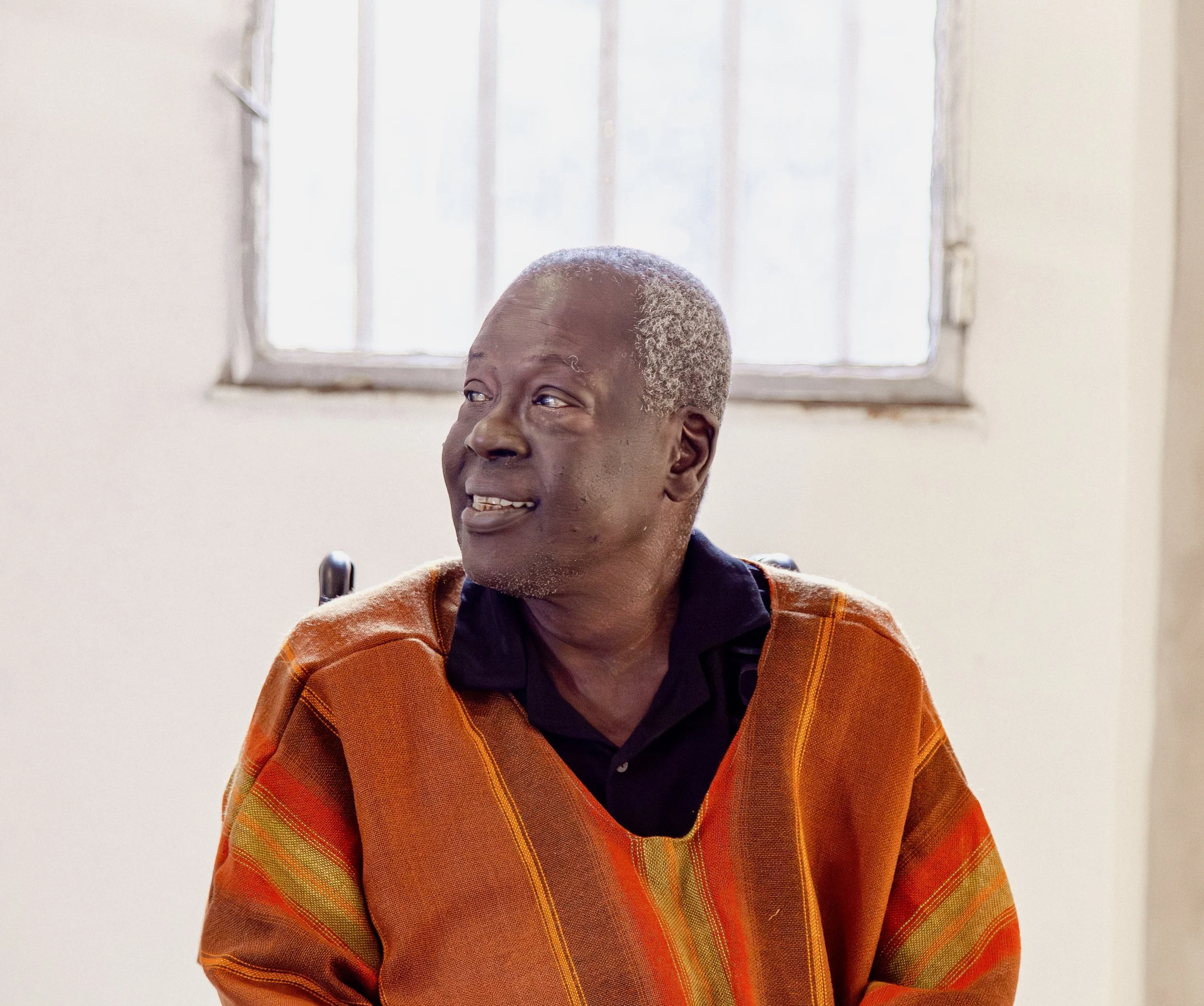
© Aicha Tamsir Niane
El Hadji Sy has always been involved in the development of art and culture of his country through collective initiatives. In 1977, he founded the first Village des Arts in a former military camp based in Dakar city center. Forced to close down, he then took over a Chinese camp and transformed it in artist studios, the current “Village des Arts”. Throughout these years, he organised international workshops with the project space and artist group “Tenq” as well as “Huit Facettes” a collective taking part in rural areas whose work was presented at Documenta 11 in 2002, In 1984,
He had several solo exhibitions such as: “New Paintings” at Selebe Yoon, Dakar, Senegal (2025) ; “Les Tambours de la Mer” at Selebe Yoon in Dakar, Senegal (2023); at Galerie Barbara Thumm, Berlin, Germany (2022); Musée de la Rue, Dakar, Senegal (2020); U-jazdowski Castle Center for Contemporary Art, Warsaw (2016); “Glass Letters”, at Bookoo Gallery, Dakar, Senegal & São Paulo Biennial (2013-2014); BrazilLinda Goodman Gallery, Johannesburg, (1995); Paul Waggoner Gallery in Chicago, USA and the Centre Culturel Français, Abidjan, Ivory Coast, Africa (1981). Internationally, his work has been exhibited in many institutions through several group exhibitions such as: “Carnivalesca, What Painting Might Be”, curated by Bettina Steinbrügge, Kunstverein Hamburg, Germany(2021); “New Images of Man”, curated by Alison M. Gingeras, Blum&Poe, Los Angeles, CA, USA(2020); “Disso - Concertation”, documenta 14, Kassel, Germany (2017); la National Gallery, Prague (2016); 31st São Paolo Biennale, São Paolo, Brazil (2015); “Art sénégalais d’aujourd’hui (Senegalese Art Today)“, Touring exhibition, Museum of Fine Arts, Boston, Boston, USA and Chicago Public Library, Chicago, USA (1980).
In 2026, he is part of the official selection of the 16th Dakar Biennale.
Amadou Kan-Si
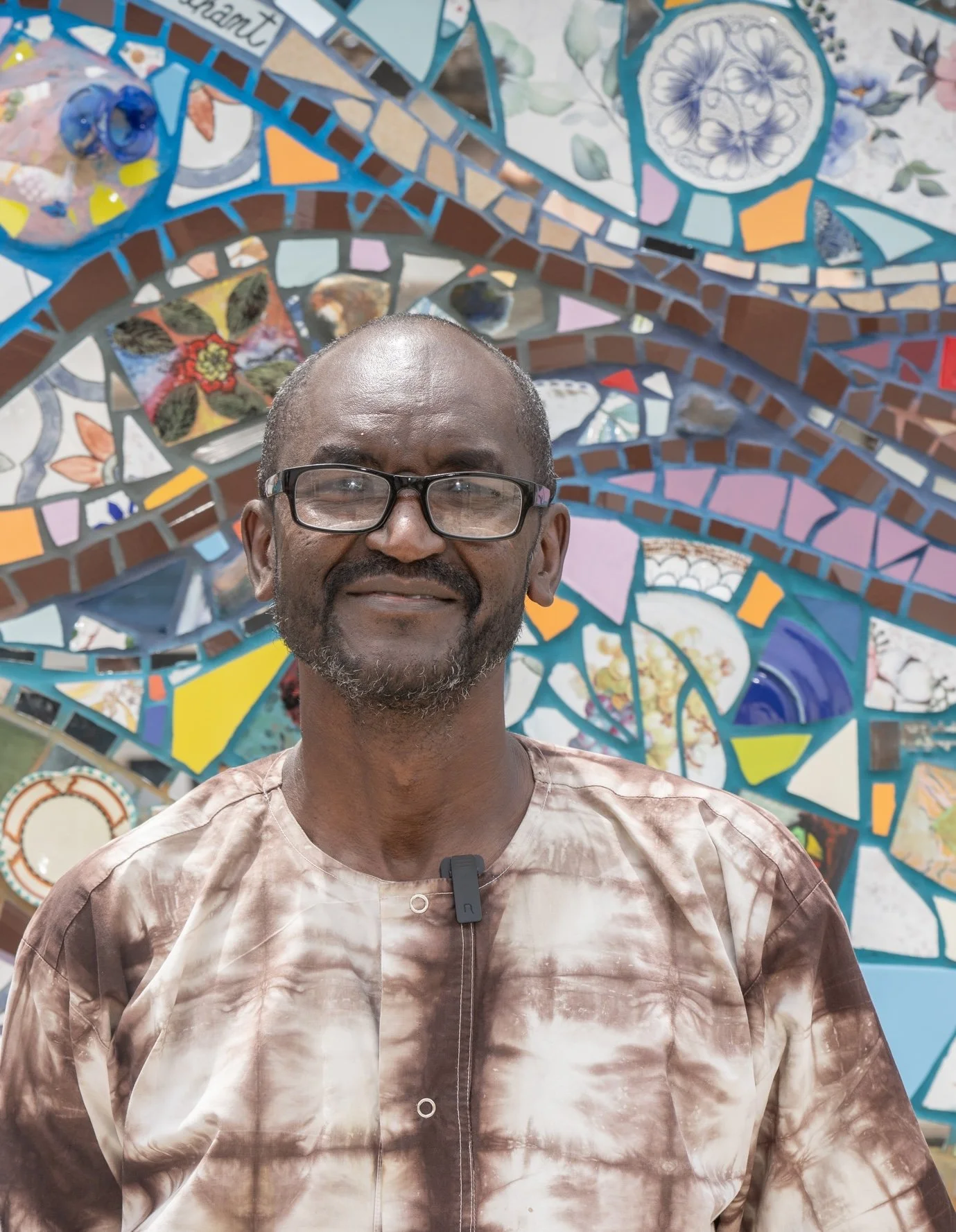
© Khalifa Hussein
Amadou Kane Sy, alias Kan-Si, graduated from the Ecole Nationale des Arts de Dakar in 1991. A multidisciplinary artist, he works in painting, engraving, installation, photography, video and poetry. Socially committed, he was president and co-founder of “Man Keneen-Ki”, an association of artists working to help street children in Dakar. He is a founding member (alongside Moustapha Dimé, Abdoulaye Ndoye, Fodé Camara, Serigne Mbaye Camara, Cheikh Niass, Jean Marie Bruce and El Hadji Sy) and coordinator of the artists' collective “Huit Facettes Interaction”, which aims to promote activities in rural areas. The collective took part in documenta 11 in Kassel in 2002. Kan Si has organised and participated in numerous international artists' residencies, exhibitions and symposia. In collaboration with the Afro-American artist Muhsana Ali, he founded and coordinated the activities of ‘Portes et Passages du Retour’, an art and holistic development centre in Mbodiene, where Kan Si and Muhsana have welcomed a number of artists and organised workshops and co-creations with local women potters and various members of the Joal-Fadiouth community.
Kan Si participates in numerous personal and collective exhibitions, such as the group show “Borders” at Fondation Gulbenkian, Lisbon, Portugal ; solo shows ‘7x7 FACETTES’ in 1993 and ‘Destructured’ in 1996 at Galerie 39, Centre Culturel Français, Dakar, Senegal; ‘Boulevard Centenaire Made in China’, in 2012 at Raw Material Company, Dakar, Senegal. In 2004, he was awarded a grant from the Ford Foundation (Triangle Art Trust) and in 2003 the City of Dakar Mayor's Prize at the Dakar Biennial. In 2023, he is a recipient of a special grant from the ADAGP (France). He participated in the 8th Dakar Biennial in 2008, in the Rencontres de Bamako, the 9th African Photography Biennial, in 2009 and the Shanghai Biennial in 2012.