Muhsana Ali
“Us, Birds”
23.11.2026-30.01.2027

Off site
Muhsana Ali
“Us, Birds”
November 23rd, 2026 - January 30th, 2027
Upon appointment only at contact@selebe-yoon.com
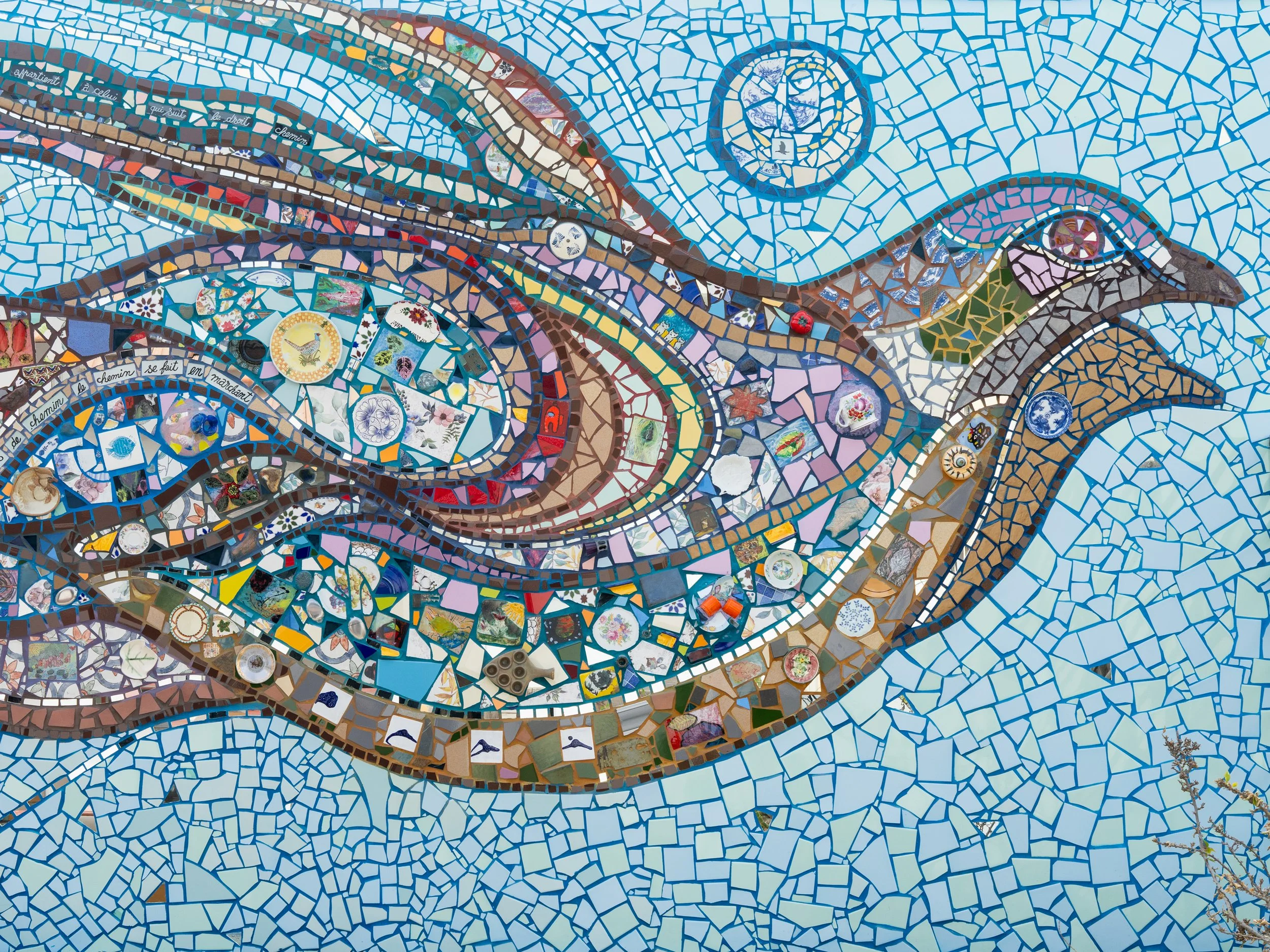
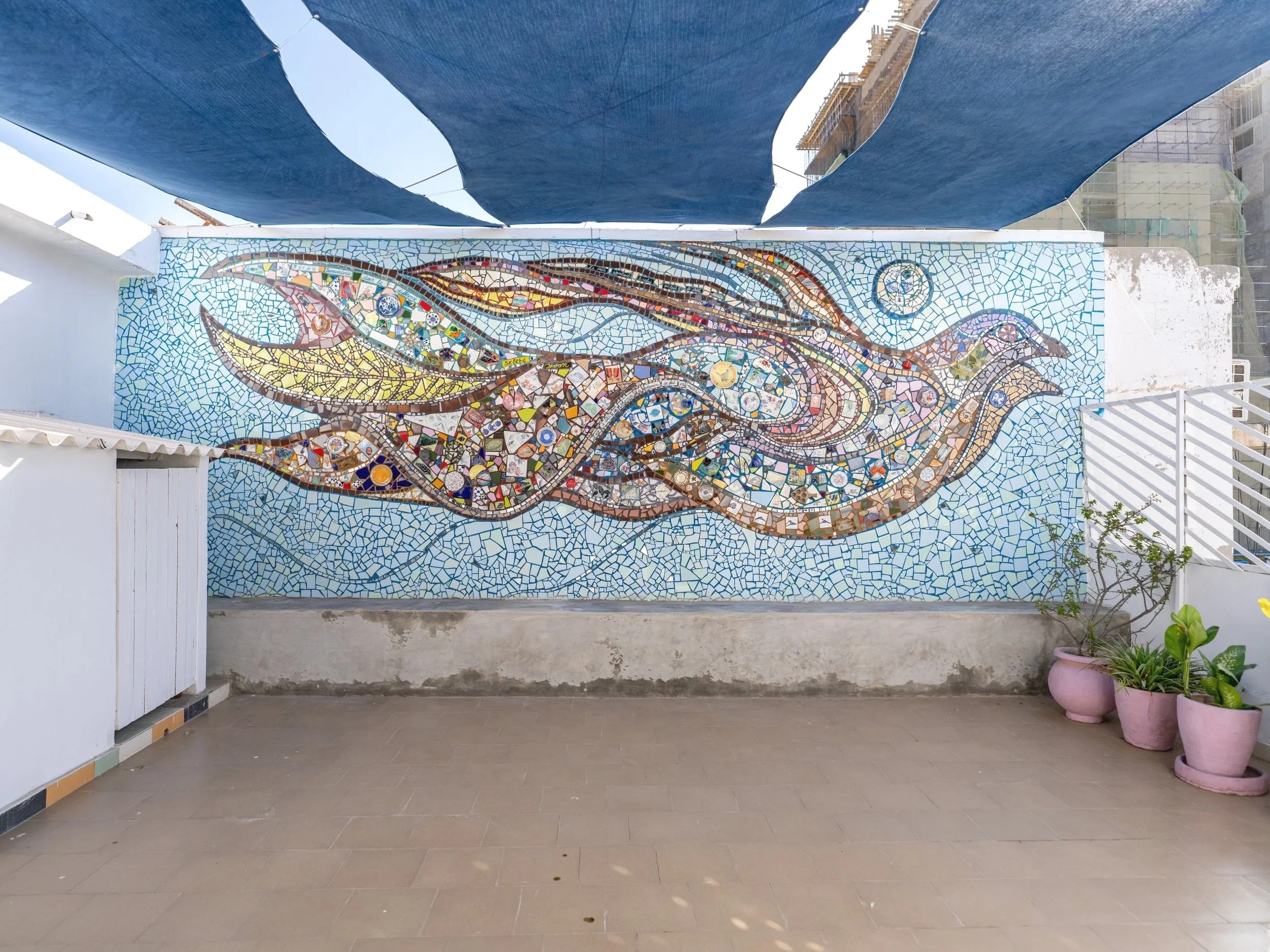
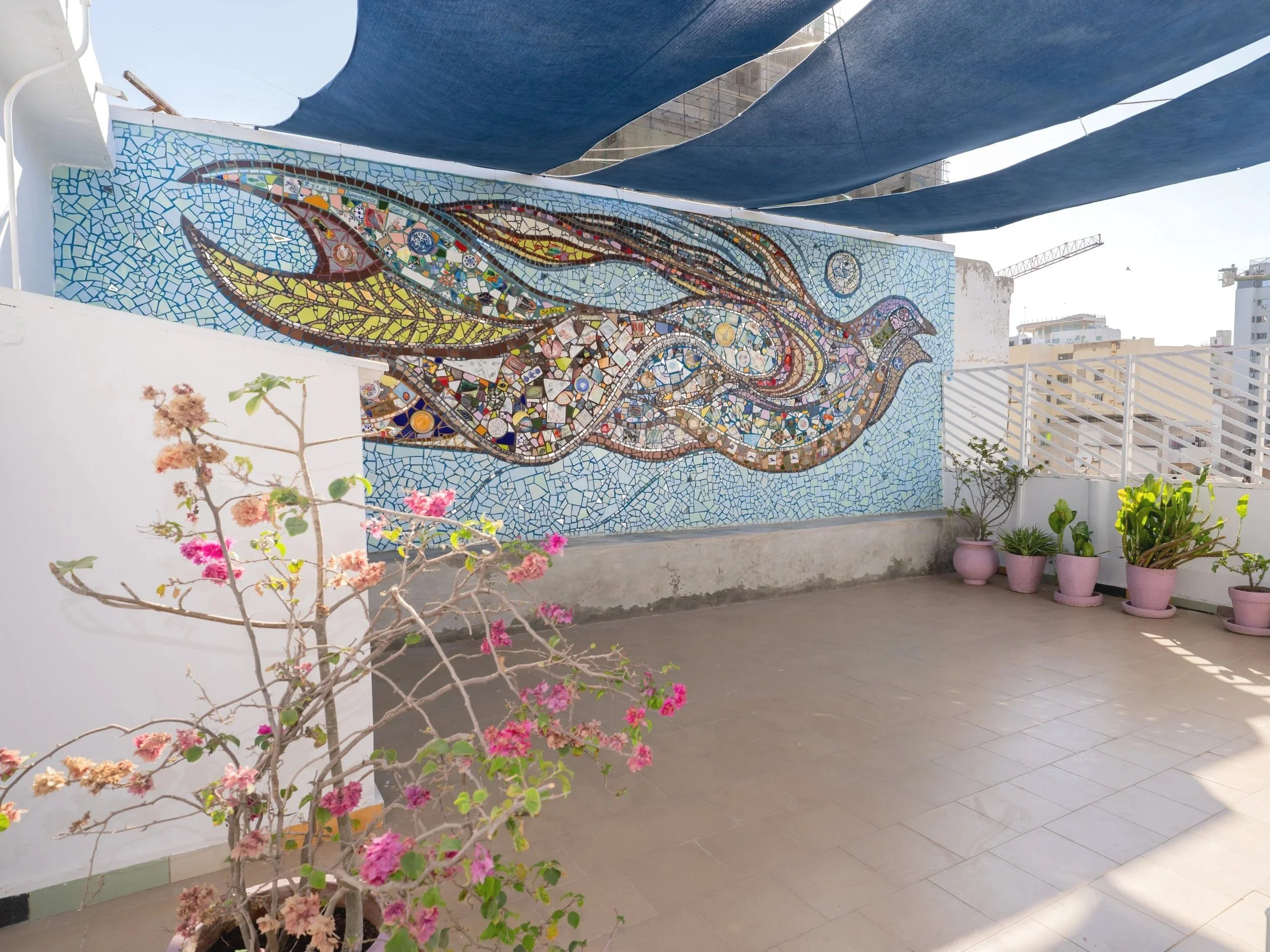
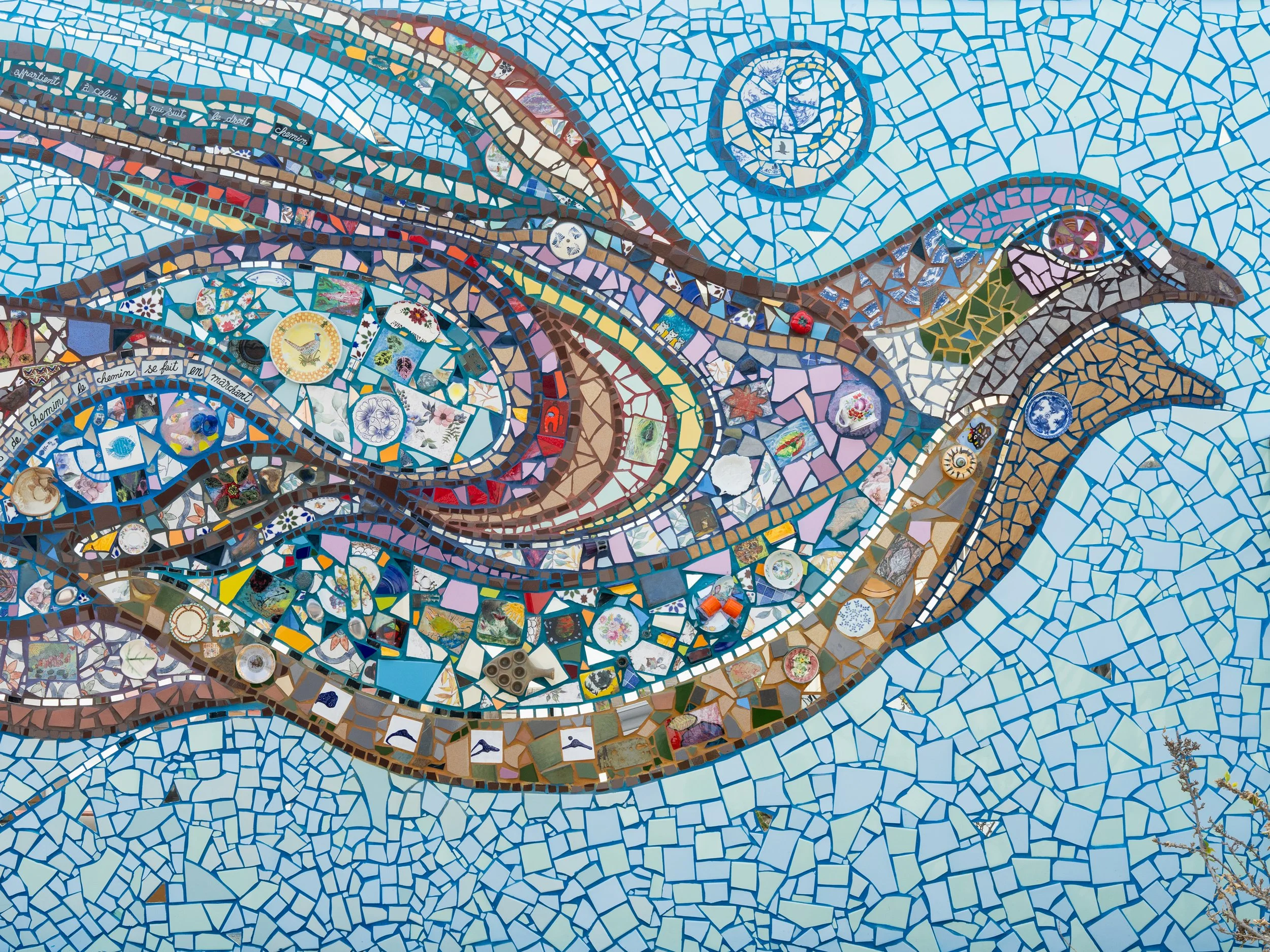
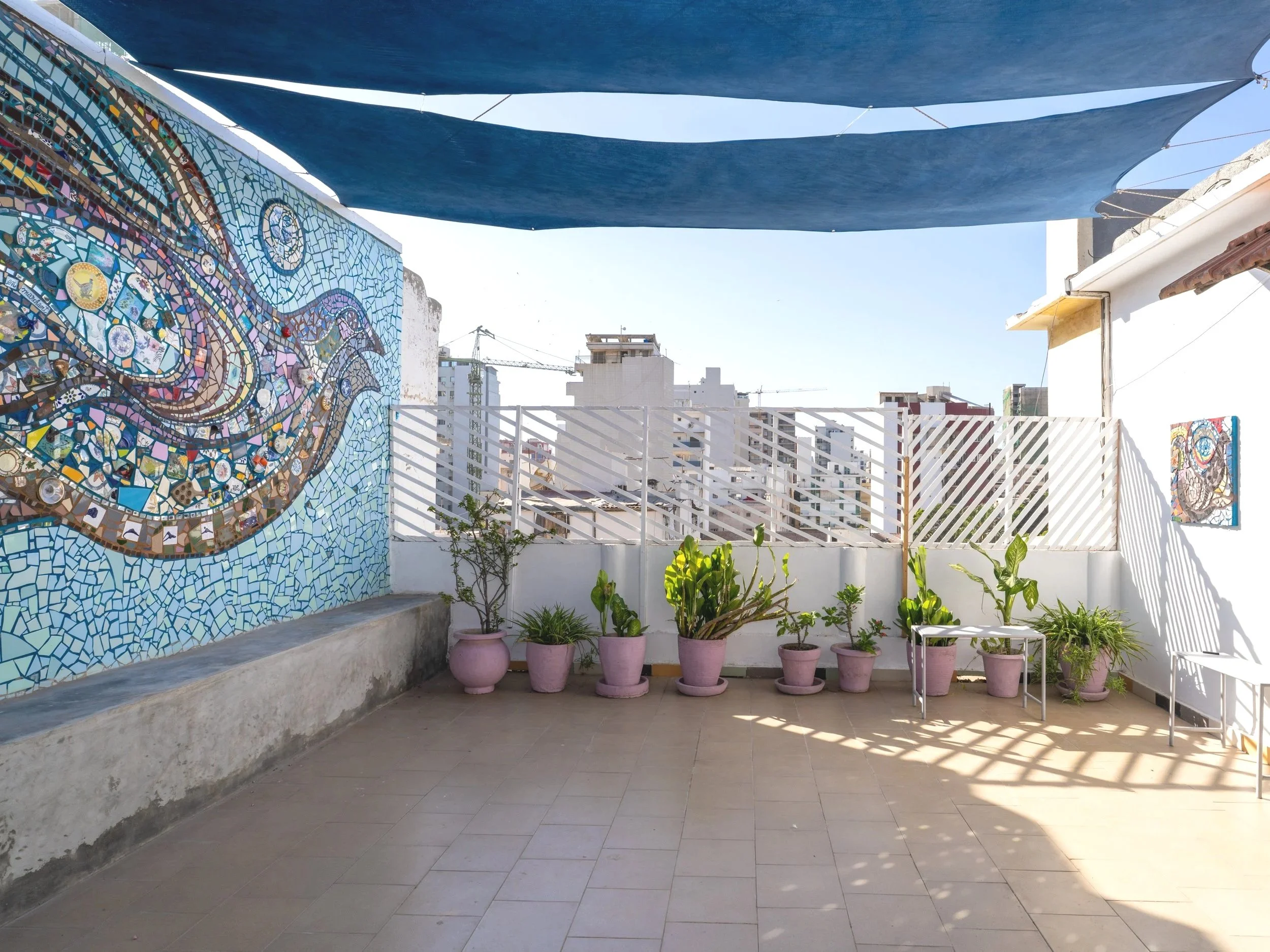
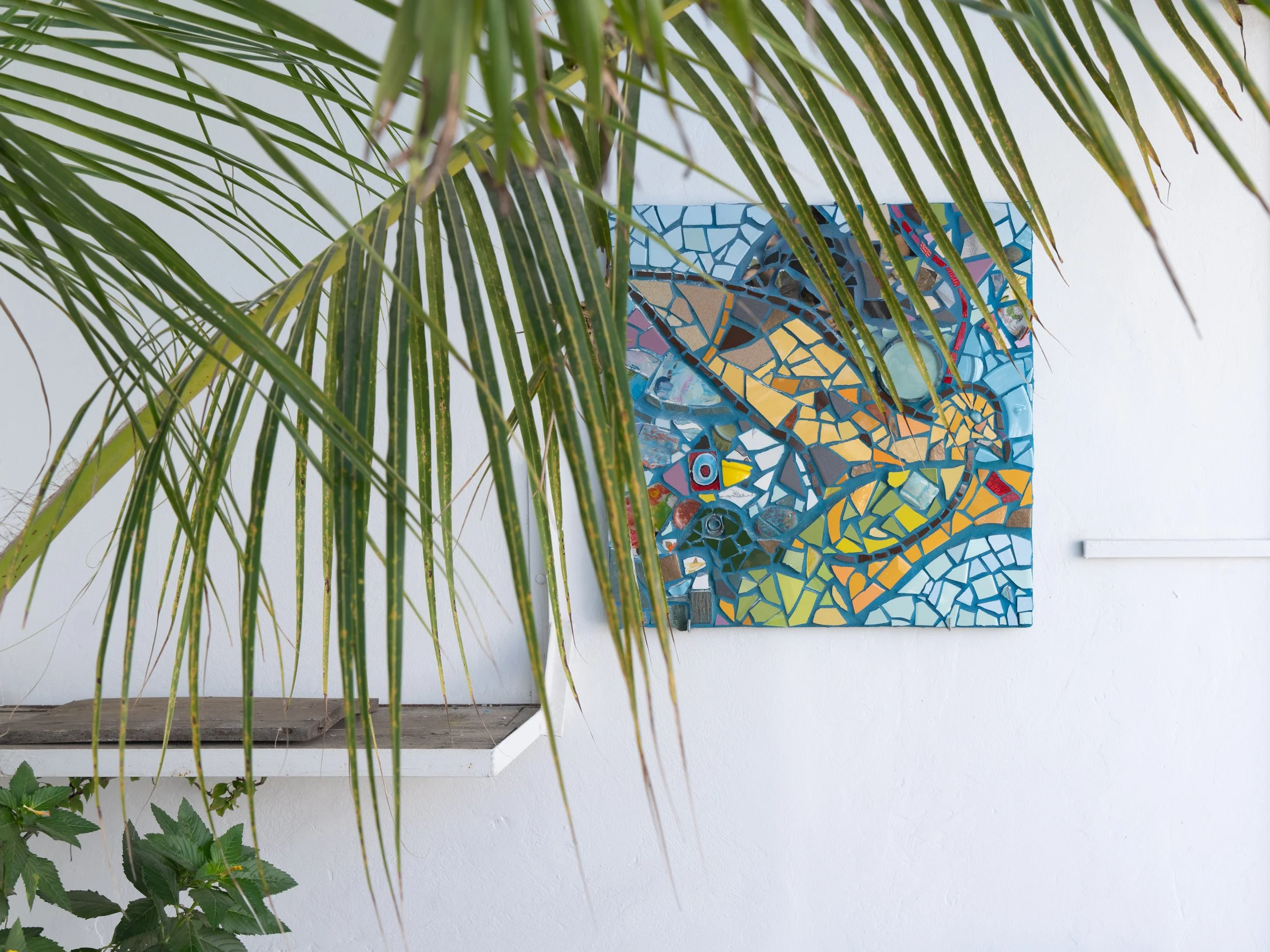
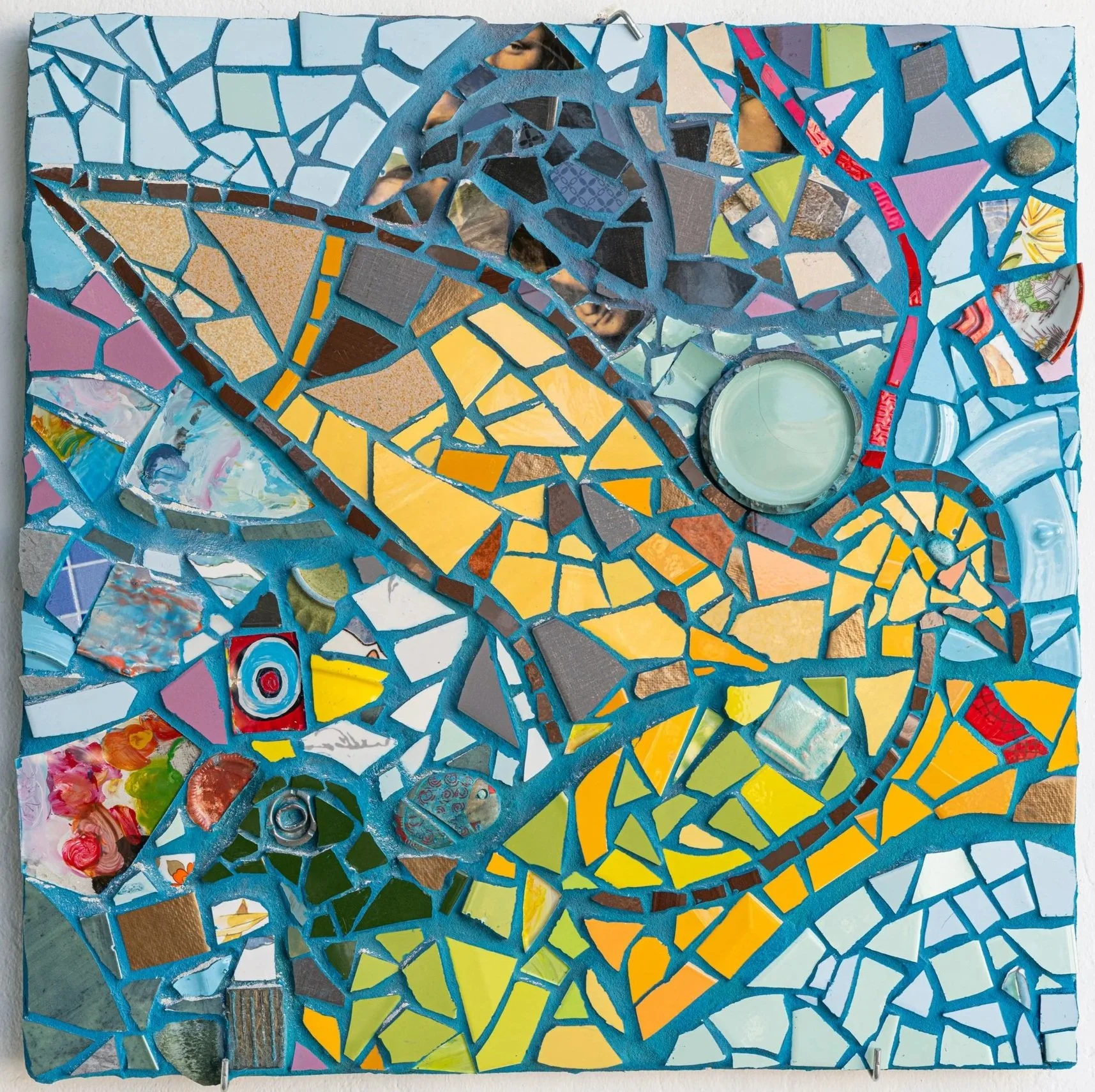
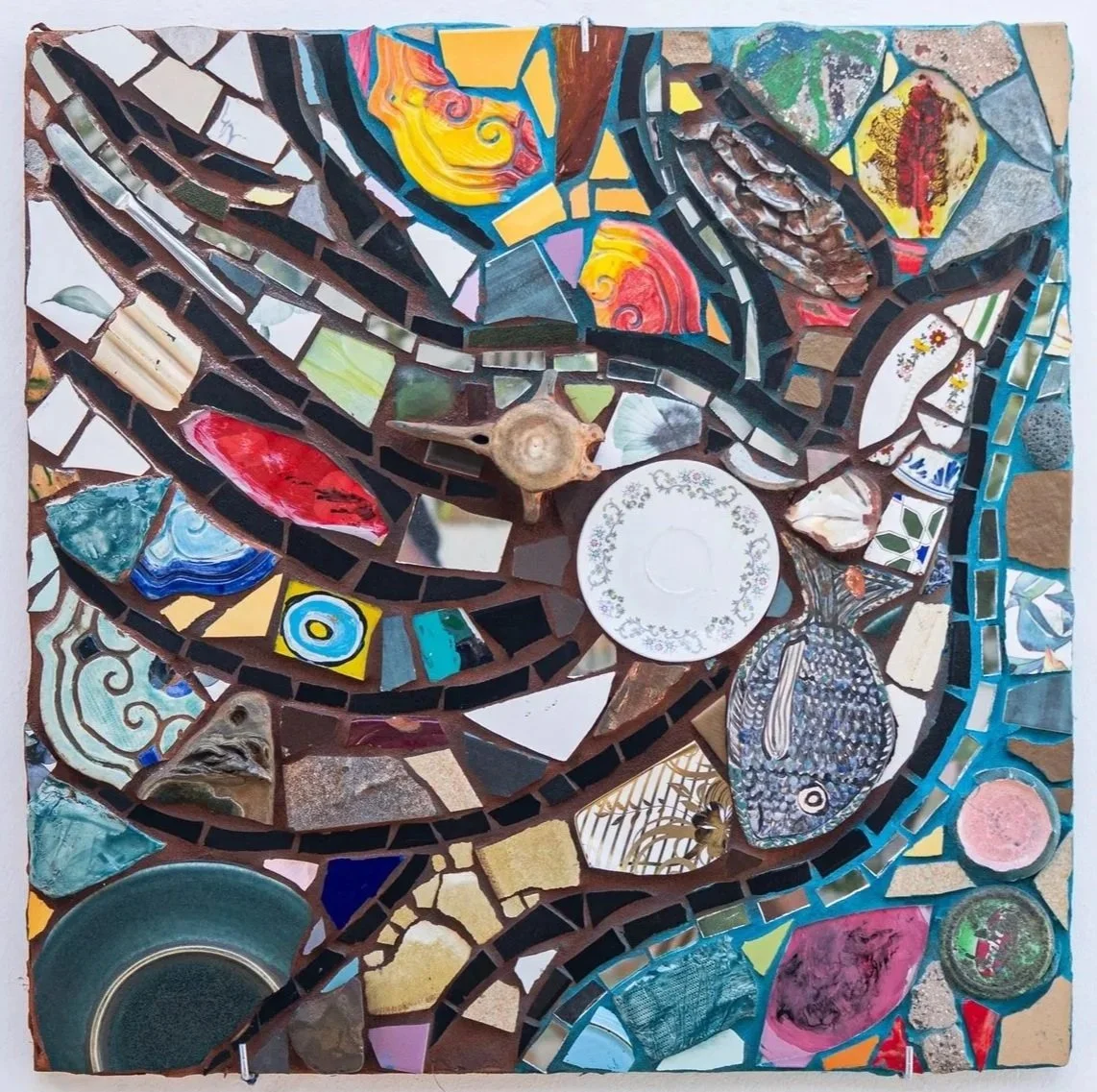
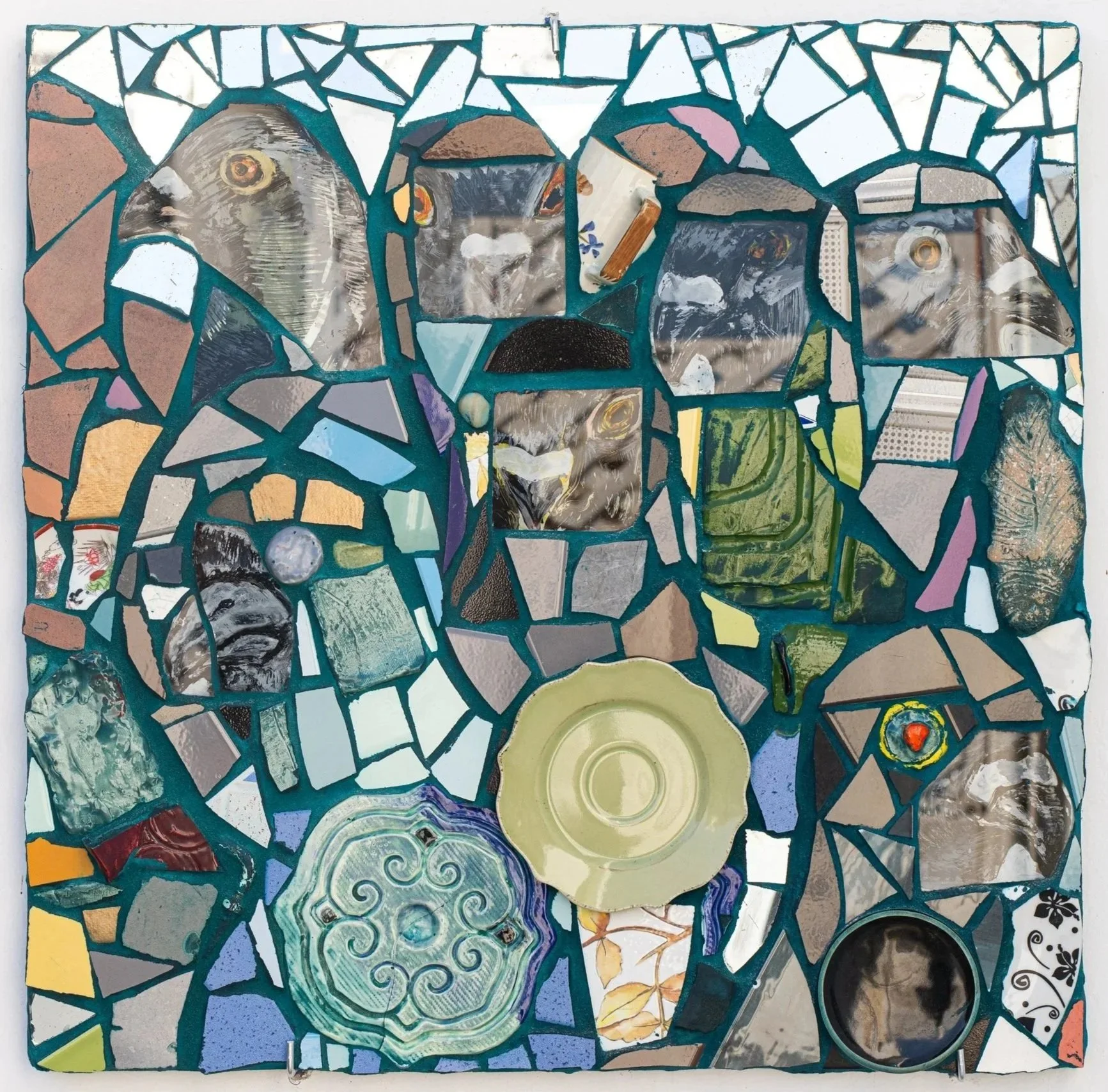
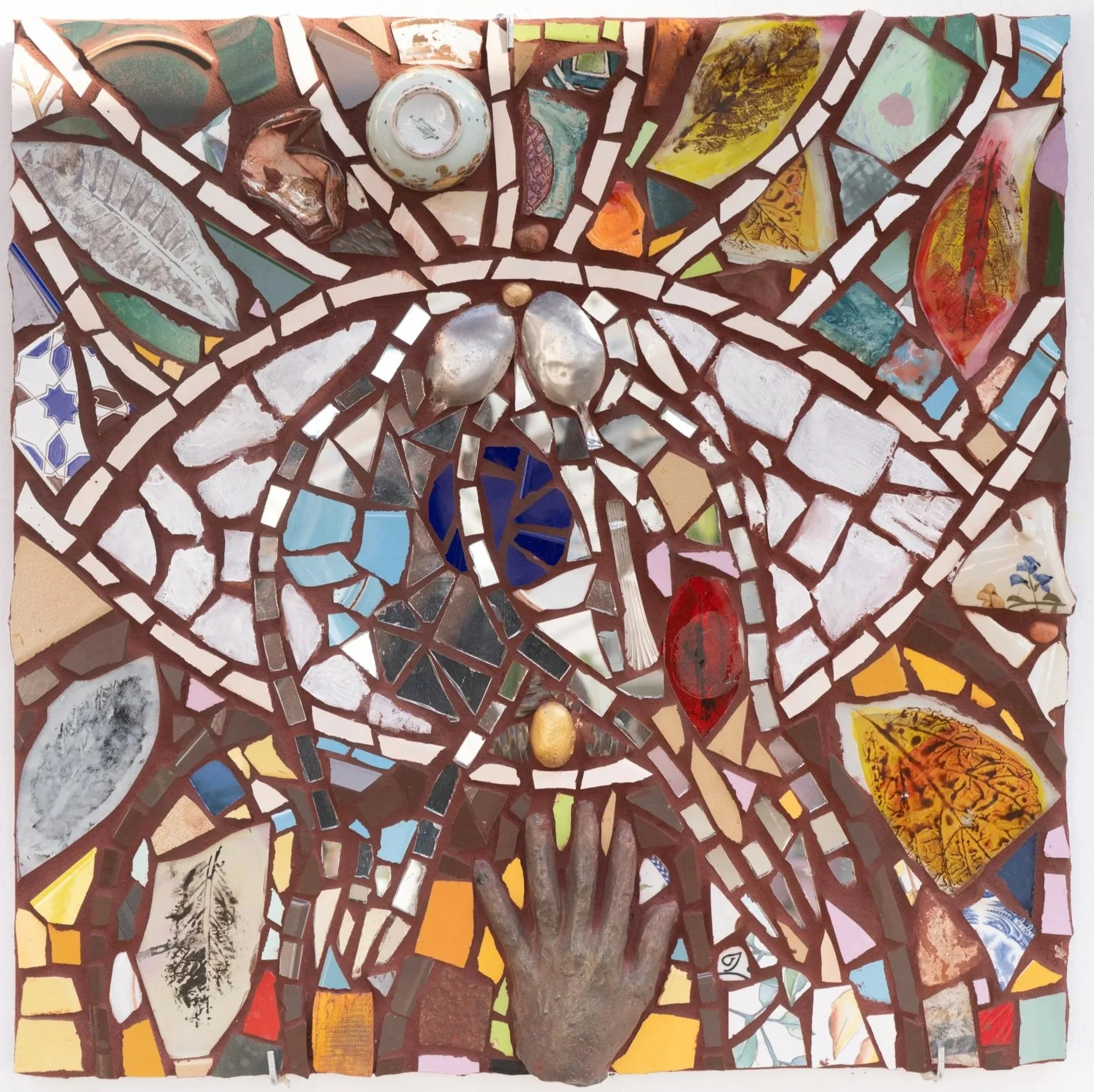
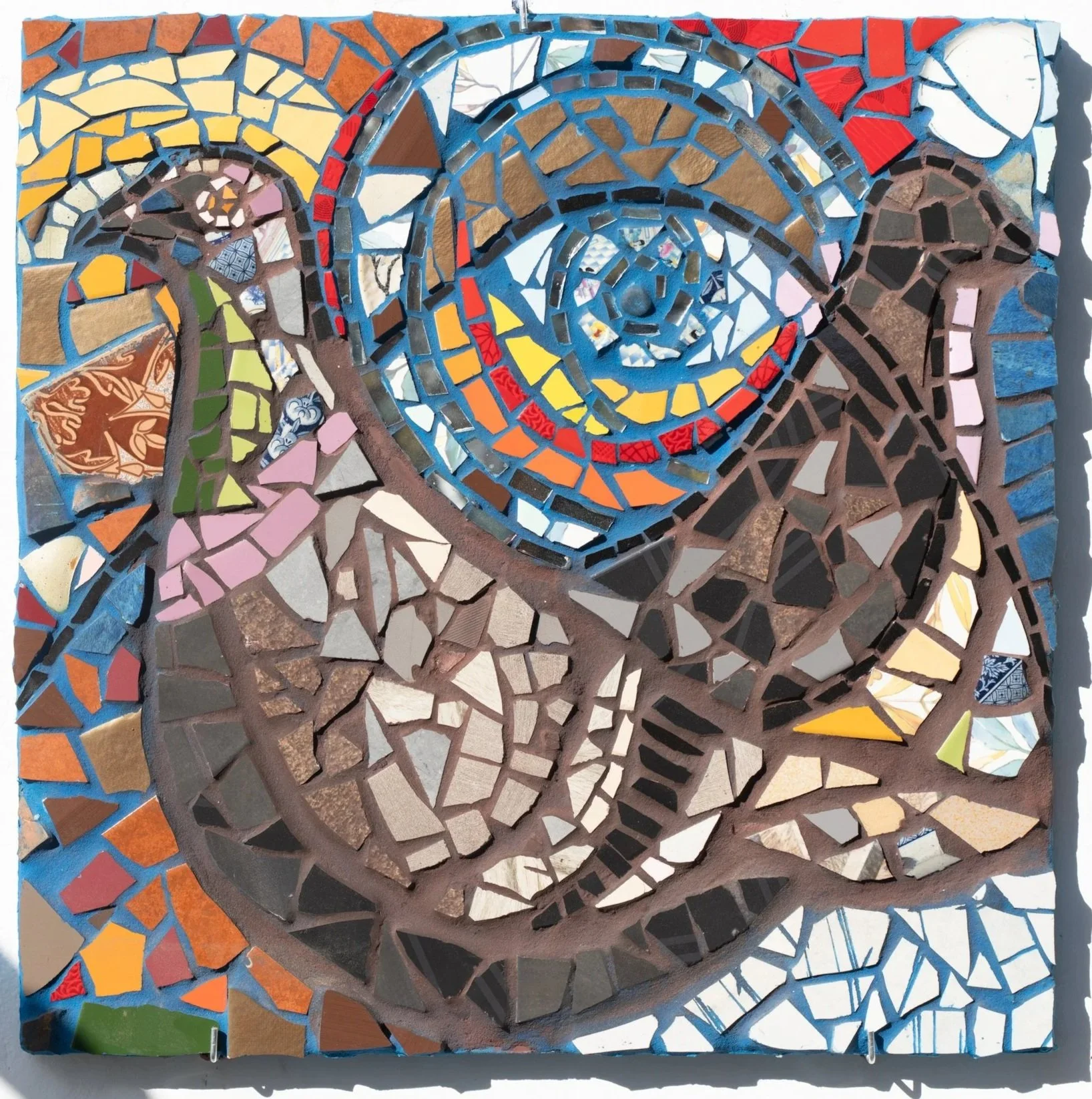
Us Birds presents a large-scale mosaic fresco by American-born, Dakar-based artist Muhsana Ali. Set against a pale blue mosaic ground, two overlapping birds stretch across the wall, their elongated bodies unfolding into sweeping wings and flowing tails. Conceived as a permanent commission for the rooftop of an old building in central Dakar, the monumental mural is composed of broken tiles, reverse-glass paintings, found objects, ceramics and hand-cut mirror fragments. In its shimmering and reflective effect, these fragments compose the expansive silhouette of birds. Curving bands of turquoise, yellow, pink, brown, and deep blue give the composition a rhythmic sense of flight. Simultaneously, the wings in its expansive character, conjure the wind, the sky and the earth - all intermingling into one. As an encounter between aesthetic forms, emotions, and Sufi spirituality, the bird becomes a symbol of spiritual quest and thus echoes mystical poet Farid al-Din Attâr’s La Conférence des oiseaux, who describes the birds’ journey as a quest towards the divine.
Since arriving in Africa in 1997, Ali has been deeply engaged with the history of enslaved African Americans and the possibility of return to the African continent, whether through physical or spiritual passage. Of African descent, her work often takes the form of symbols of liberation, repair and flight, seeking possibilities for renewal through a reconnection with rural knowledge, practices and values on the African continent. Against the backdrop of an increasingly dense and urbanized Dakar, the bird emerges as a spiritual vision: an embodiment of transcendence, and boundless possibility. The artist says “there could be no image more powerfully antithetical to slavery than that of a soaring bird”.
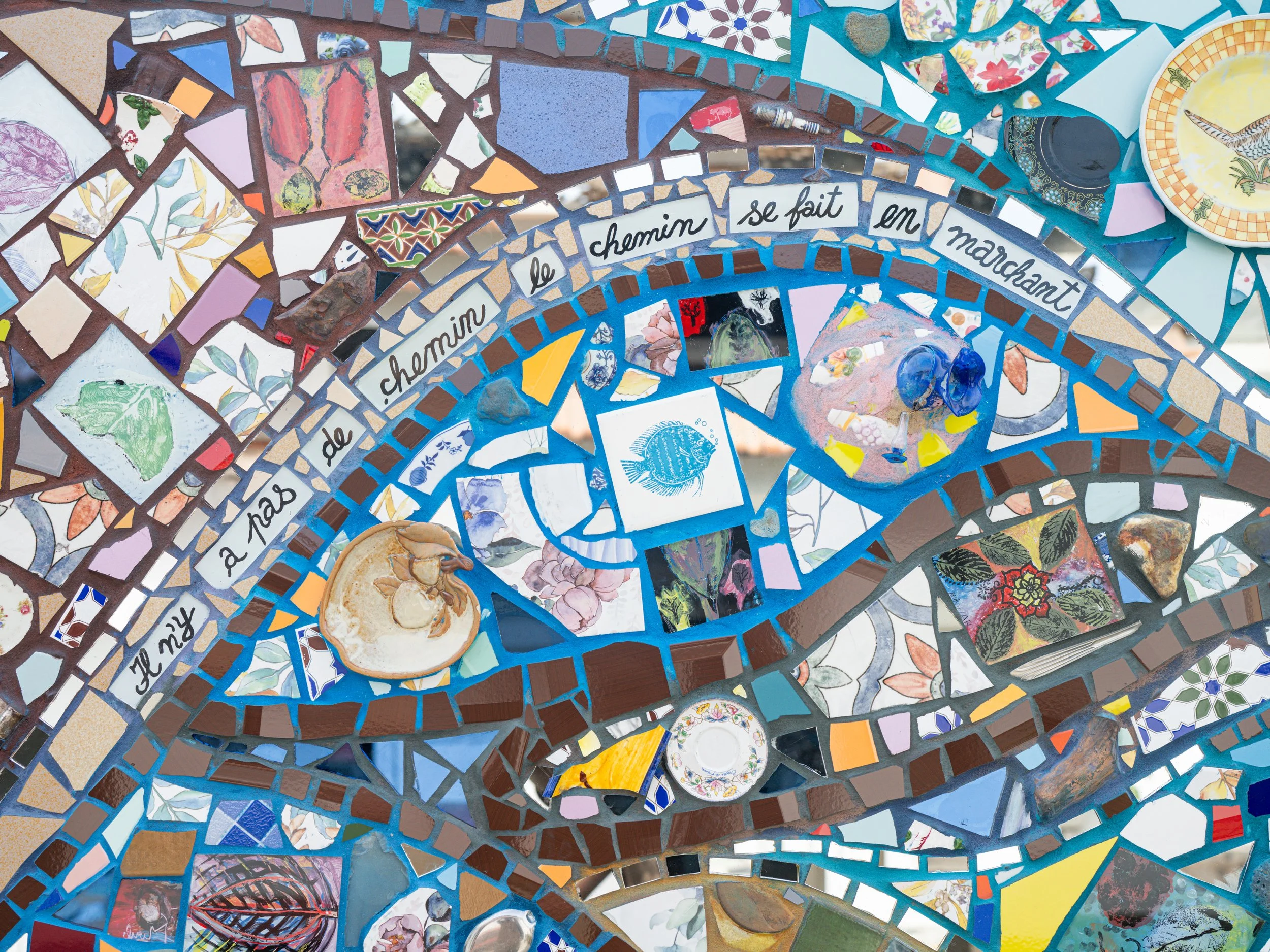
Muhsana Ali conceives of mosaic as a collaborative and community-centred practice: the reverse-glass paintings are often produced during workshops with children, while some of the ceramic elements were made by women potters in Mbodiène, where she co-founded the art and development center Portes & Passages du Retour in 2005. Objects sourced from markets and second-hand stalls attest to the circulation of goods and materials across the African continent and beyond. Chinoiseries sit alongside ceramics from Ethiopia and Morocco, interspersed with everyday metal objects such as forks and keys. The birds’ bodies thus bring together materials shaped by different hands and drawn from diverse geographies, carrying traces of their uses and journeys. The bird’s eye, however, is as significant as the bird itself. The forms of the plumage trace the bird’s body and seem to converge towards its rounded, anchoring presence. It becomes a point of connection between sight and insight, linking the outside world to our inner vision and an attention to what remains invisible. For the artist, working with colour in this particular work became a therapeutic exercise in visual perception: attending to subtle variations in hue, saturation and light, and training the eye to recognise how individual details come together to form a whole.
This work has been produced in collaboration with artist Kan-Si, mosaic fabrication assistant Hassan Malick Sy and studio assistant Mouhamed Faye.
© Text copyright: Selebe Yoon
Artist’s biography
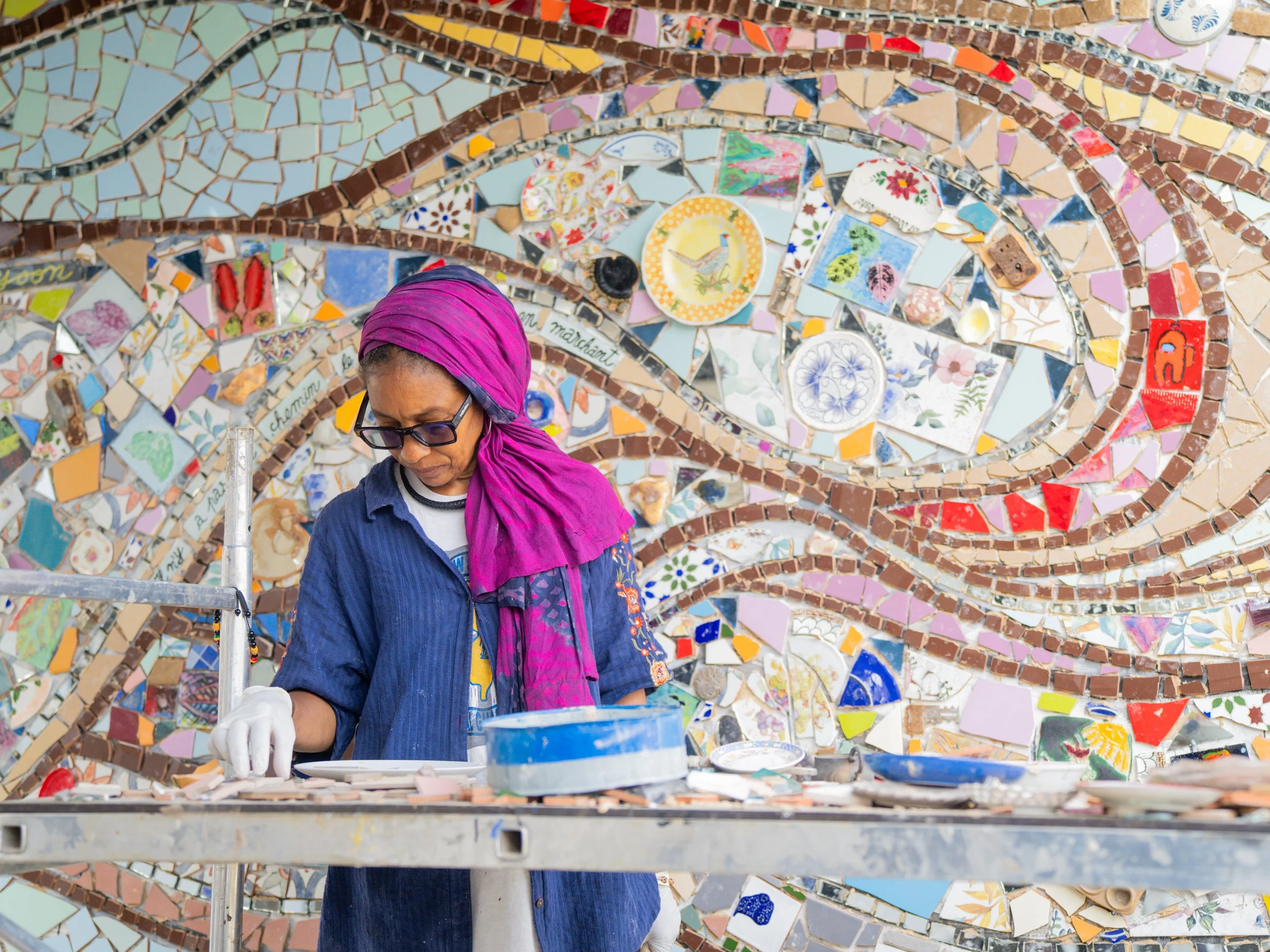
© Khalifa Hussein
Born in 1967 in Philadelphia in the United States, Muhsana Ali is a visual artist and muralist. Living and working in Senegal for over twenty years, her work is both anchored in her spiritual practice as much as in a deep commitment to social engagement. Her pieces act as a form of remembrance, grounded in a deep awareness of her ancestors’ experience. It offers openings to history, exploring possibilities for liberation and repair through a renewed connection to the unseen, to nature, the body and a sense of collectivity.
She holds degrees from the Parsons School of Design (New York), the University of the Arts, the Pennsylvania Academy of the Fine Arts (Philadelphia) in the United States, as well as the American College in Paris and the University of Paris 8 (Saint-Denis) in France. In 2004, she trained alongside artist Isaiah Zagar, a renowned Philadelphia mosaicist who taught her his monumental mosaic technique. Ali employs a wide range of materials, favoring three-dimensional work. She works with reverse glass painting, mirror, and tile, as well as raw, organic elements like earth, wood, and bone, along with textiles and reclaimed objects. Through its capacity to transform its surroundings, as well as its aesthetic and architectural qualities, mosaic offers Muhsana Ali a means of revitalising existing sites and reimagining public spaces. Developed in response to particular places, her works engage with their histories, communities and social realities. In 1997, she was awarded a Fulbright grant, which allowed her to travel across seven African countries. She was also a recipient of the Pew Fellowship in the Arts. In 1999, following a two-year exhibition project in which she involved marginalized youth in Abidjan, her artistic vision shifted toward community art. To support them, she founded the American NGO Doors and Passageways of Return Foundation in 2000. In 2005, she brought the mission of this organization to Mbodiène, Senegal, to establish a holistic art center and residency space, which she directs alongside Kan-Si. She held her first exhibition in 1988 at the Avant-Garde Uniques Gallery in Philadelphia (United States). In 1999, her project “Portes et Passages du retour” – a body of work that took nearly two years to complete – was exhibited at the Château—Ancien Hôpital Centrale du Plateau in Abidjan (Ivory Coast). She subsequently exhibited regularly in the United States and Africa: at the Boribana Museum in 2009, at Raw Material Company in 2013, at Ker Thiossane in 2017, and at the Museum of Black Civilisations in Dakar, Senegal. She has created permanent mosaic murals for the Phillips Collection in Washington D.C., as well as for the World Bank in West Africa and at Ker Thiossane in Dakar. In 2002 and 2014, she was selected to take part in the Dakar Biennale (the 5th and 11th editions).